How to Pick the Right Trusted Polished Concrete Floors Services in Chatham, IL
Picking the right polished concrete floors in Chatham, IL? Here is how to choose the finish, gloss level, and contractor that fits your home or business.
So you have decided polished concrete might be the right floor for your home or business. Good choice. But here is where things get tricky — there are more decisions inside that one choice than most people realize. Gloss level. Aggregate exposure. Color. Densifier type. Edge work. Each of these affects how the finished floor looks, performs, and lasts.
A lot of homeowners walk into this thinking it is one finish. Then they see two polished concrete floors side by side and notice how different they look from each other. That is when the real questions start: which version do I actually want?
Concrete Art LLC has helped homeowners and business owners across central Illinois work through these exact decisions, and we have noticed that the people who plan carefully end up far happier with the result than those who let the contractor pick for them. This article walks through the choices that matter most and how to think about each one.
Decision One: Gloss Level
The first big choice is how shiny you want the floor to be. Polished concrete comes in four main gloss levels, and each one creates a completely different look.
Flat or Matte Finish
This is the lowest gloss level. The surface reflects almost no light. It looks more like sealed natural stone than a polished surface. Some people prefer this because it feels less commercial and shows fewer footprints and smudges.
Satin Finish
A satin finish has a soft sheen — enough to reflect some light but not enough to act like a mirror. This is the most popular choice for residential projects because it balances appearance with practicality. It looks clean and intentional without being overly flashy.
Semi-Gloss Finish
This level has a clear reflection but not a true mirror finish. You can see light bouncing off the surface and faint reflections of overhead lighting. Common in retail spaces and modern homes that want a sharper visual presence.
High-Gloss Finish
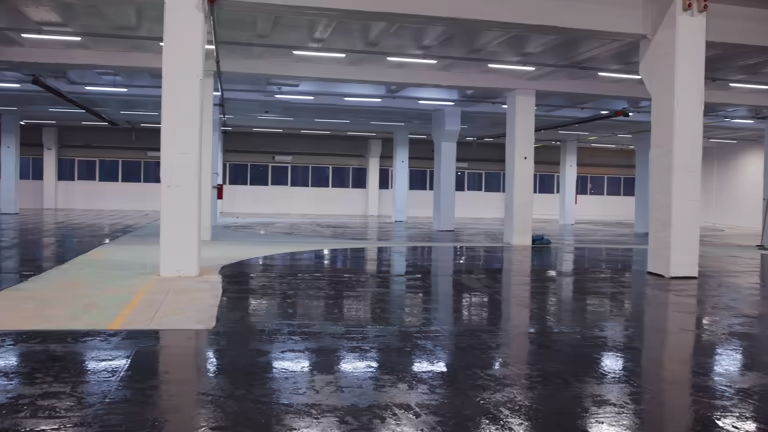
This is the mirror finish people often picture when they think of polished concrete. It reflects clearly, like a polished granite countertop. Looks impressive but shows every scuff, footprint, and smudge. Best for showrooms, lobbies, and spaces where appearance matters more than practical day-to-day use.
For most homes, satin or semi-gloss tends to be the sweet spot. High-gloss looks incredible on day one but requires more attention to keep looking that way.
Decision Two: Aggregate Exposure
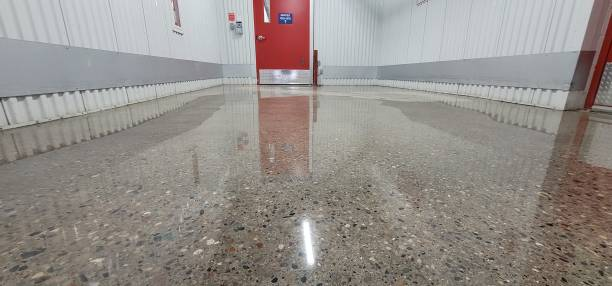
Concrete is made of cement mixed with aggregate — small stones and sand. When you polish concrete, you can choose how much of that aggregate you grind into and expose. This is one of the biggest visual decisions and it changes the floor’s whole character.
Cream Finish
The grinding stays at the very top layer of concrete. No stones are visible. The surface looks like smooth, uniform concrete. This is the simplest look and works well for clean modern aesthetics.
Salt and Pepper Finish
The grinding goes slightly deeper and exposes some small bits of fine aggregate. Looks speckled, like a granite countertop with subtle texture. This is a popular middle-ground choice.
Exposed Aggregate Finish
The deepest grind. Larger stones in the concrete are fully exposed and polished. The floor looks like polished terrazzo — busy, textured, full of visual interest. Some people love it. Others find it too busy for residential spaces.
What is in your concrete matters here. If your concrete was poured with attractive aggregate, exposing it can produce a beautiful unique finish. If your concrete has dull or oddly colored aggregate, you may want to stick with a cream finish that hides it.
Decision Three: Color and Staining
A lot of people assume polished concrete is always gray. That is not true. You can add color in a few different ways, and each method produces a different look.
Acid stains create variegated, mottled colors that look like natural stone. Earth tones like browns, greens, and rust are common. The color is unpredictable in a good way — no two areas look exactly the same.
Water-based dyes give more consistent, predictable color. They come in a wider range of shades, including blues, reds, blacks, and grays. The color is more uniform across the floor.
Integral colors are added to the concrete itself when it is poured, so the color goes all the way through. This is only an option if you are polishing a new pour, not an existing slab.
For Chatham homes built within the last few decades, most have standard gray concrete that takes dyes and stains well. The natural gray is also a popular choice — clean, neutral, and matches almost any decor.
Here is a quick comparison to help with the decision:
| Choice | Best For | Typical Cost Premium | Visual Effect |
| Natural gray | Clean modern look | $0 | Uniform light gray |
| Water-based dye | Custom color, even tone | $1 – $2 per sq ft | Solid, consistent color |
| Acid stain | Variegated natural look | $1.50 – $3 per sq ft | Mottled, stone-like |
| Integral color (new pour only) | Long-term color durability | $2 – $4 per sq ft | Color goes through full slab |
Decision Four: Densifier Type
This is the less visible but equally important decision. The densifier is the chemical that hardens the concrete during polishing. There are two main types used today.
Lithium-based densifiers are more expensive but produce the best long-term results. They penetrate deeper, react faster, and create a harder finished surface. Most quality residential and commercial projects use lithium densifiers today.
Sodium or potassium silicate densifiers are older formulations. They cost less but do not penetrate as deeply. They still work, just not as well as lithium for long-term durability.
If a contractor’s quote is significantly cheaper than others, ask which densifier they plan to use. Skipping the better densifier is one of the most common ways contractors cut corners on a polished concrete job.
According to a 2022 industry study by the Concrete Polishing Association of America, polished floors finished with lithium densifiers show 25 to 40 percent less surface wear after five years compared to those finished with sodium silicate densifiers. The added upfront cost generally pays back through the longer lifespan and better appearance over time.
Decision Five: How to Pick the Right Contractor
All the decisions above only matter if the work gets done correctly. Polished concrete is a craft. The same concrete polished by two different crews can look noticeably different — and perform differently over the years.
Here is what to look for when picking a contractor:
Ask to see completed projects in person if possible. Photos help, but real floors tell the truth. Look at how clean the edges are, how consistent the gloss is across the floor, and how the color flows through the space.
Ask which equipment they use. Quality polishing requires planetary grinders, not basic hand grinders. Larger machines produce more even results and finish jobs faster.
Ask which densifier and dyes they use. A contractor who cannot answer this question clearly is one to avoid.
Get a written quote with the gloss level, aggregate exposure, color, and densifier all specified in writing. Verbal descriptions create misunderstandings.
Check references and reviews. Look for repeat customers and long-term satisfaction, not just one-time praise.
Our team handles Expert polished concrete floors in Chatham, IL with detailed quotes that spell out exactly what you are getting — gloss level, finish type, color treatment, and densifier all included. No surprises and no vague language.
Decision Six: Where to Polish and Where to Skip
One more practical decision: not every room needs polished concrete. Think through which areas actually benefit from this finish.
Garages, basements, kitchens, and open-plan living areas are typical great fits. Hallways and entryways too. These spaces benefit from the durability and easy cleaning that polished concrete offers.
Bedrooms are often left with softer flooring for comfort. Bathrooms can go either way — polished concrete works in bathrooms but slip resistance becomes a bigger concern, and proper sealing matters more.
A 2023 survey by Houzz found that 78 percent of homeowners who installed polished concrete in their main living areas reported they would do it again. Satisfaction was highest among those who left soft flooring in bedrooms and used polished concrete only in high-traffic spaces.
Final Thoughts
Picking the right polished concrete floor comes down to the small decisions stacked on top of each other. Gloss level affects how the floor looks every day. Aggregate exposure changes its whole character. Color treatments give you options far beyond plain gray. The densifier you choose decides how well the floor holds up over decades. And the contractor you pick determines whether all of these choices come together the way you imagined. Taking time to work through each decision before signing a quote saves you from looking at the wrong finish for the next 20 years.
Our team offers Best concrete floor polishing near me in Chatham, IL with honest guidance on each of these choices, real samples you can see in person, and finishes built to perform for decades. If you are planning a polished concrete project for your home or business, reach out and we are happy to walk you through your options and answer any questions specific to your space.
Frequently Asked Questions
How do I know what aggregate is in my existing concrete?
The only way to know for sure is to do a small test grind in an inconspicuous area. A reputable polishing contractor will offer this as part of their assessment process. It usually involves grinding a square foot or two at different depths so you can see what is hiding under the surface. This small step prevents major disappointment after committing to a specific exposure level.
Can I change the gloss level later if I do not like it?
Yes, but it costs money. Going from a lower gloss to a higher gloss is straightforward — additional polishing brings the shine up. Going from high gloss to a softer finish is harder and may require some abrasive work to dull the surface. Picking the right gloss level the first time is much cheaper than changing it later.
Will polished concrete work in older homes in Chatham?
In most cases yes, but the slab condition matters a lot. Older homes often have concrete that has cracks, patches, or unevenness that needs addressing before polishing. A pre-project inspection tells you whether your specific slab is a good candidate or whether prep work would make the project less practical.
How long does the polished concrete process take?
A typical home project of 500 to 1,000 square feet takes two to four days from start to finish. Larger jobs or projects with significant prep work — old coatings, glue removal, or crack repair — take longer. Color treatments add roughly a day to the schedule. Your contractor should provide a clear timeline before starting.
Does polished concrete add value to a home?
Polished concrete is increasingly seen as a premium finish, especially in modern and contemporary homes. Real estate data from the last few years shows that homes with polished concrete in main living areas often sell faster and at slightly higher prices than comparable homes with basic vinyl or aging carpet. The exact value bump depends on the local market and the overall quality of the installation.