Commercial Concrete Polishing in Rochester, IL
Durable commercial concrete polishing in Rochester, IL. Concrete Art LLC delivers industrial-grade floors for warehouses, retail, and offices. Get your free quote.
Your warehouse floor is dusting so badly that forklift tires kick up clouds on every pass. The retail space you are opening next month has bare concrete that looks unfinished and stains with every spill. You have been quoted epoxy coatings twice the cost of your flooring budget, and you are starting to wonder if there is a better way to get a professional, durable surface without the ongoing maintenance headaches. In Rochester, IL, these are not unusual concerns for business owners — they are the daily reality of running operations on bare concrete in a climate that swings from subzero winters to humid 95-degree summers. Finding commercial concrete polishing that actually holds up to forklift traffic, chemical exposure, and Illinois freeze-thaw cycles means working with a team that understands industrial floor science, not just rental equipment. At Concrete Art LLC, we have spent years polishing commercial floors across Sangamon County that outlast coatings, reduce maintenance costs, and meet the aesthetic demands of modern business spaces.
What Commercial Concrete Polishing Actually Involves
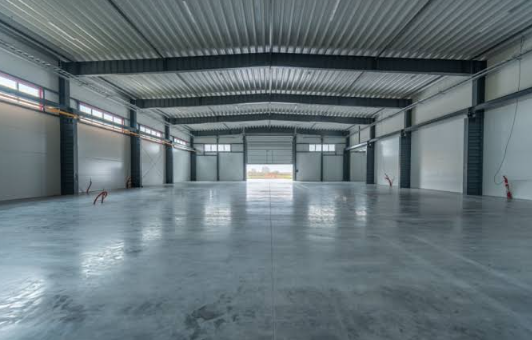
Commercial concrete polishing is a mechanical process that transforms an existing concrete slab into a dense, hard, reflective surface through progressive diamond grinding. The process starts with coarse metal-bond diamond segments that grind away the top layer of porous concrete, exposing aggregate depending on the desired finish level — cream (Class A), fine sand (Class B), or coarse stone (Class C). Each successive grit level, from 30 to 3,000, refines the surface until it reaches the specified gloss level. A lithium-based densifier is applied during the process to chemically harden the concrete by filling capillary pores, and a guard or burnishing compound creates the final protective layer.
In Rochester, IL, we have noticed that most commercial clients assume polished concrete is just grinding and shining — something any Affordable commercial concrete polishing in Rochester, IL with a grinder can handle. The reality is that commercial floors require precise floor flatness (FF) measurements, joint fill with semi-rigid polyurea to prevent joint shoulder damage under wheeled traffic, and correct densifier chemistry matched to the concrete’s porosity and age. A floor that looks acceptable in daylight can reveal uneven aggregate exposure, visible scratch patterns, and soft spots that dust under traffic if the refinement process was rushed or the wrong diamond bond was used for the concrete’s hardness.
Working with clients in Rochester, our team found that Central Illinois concrete pours from the 1980s and 1990s are often softer and more porous than modern mixes, which changes the entire polishing sequence. Older slabs require slower initial grinding with softer-bond diamonds to prevent glazing, and they absorb densifier differently than newer high-PSI concrete. Most out-of-area polishing crews apply the same generic sequence regardless of slab age, which produces inconsistent results and premature wear in high-traffic zones. We always test slab hardness with a Mohs scratch test before selecting our diamond bond and grit progression.
The Real Challenge in Rochester, IL
Central Illinois’ climate and industrial economy create Reliable commercial concrete polishing in Rochester, IL challenges that coastal or southern contractors never encounter. Rochester sits in Sangamon County where winter temperatures regularly drop below 10 degrees, summer humidity exceeds 80 percent for weeks, and the freeze-thaw cycle between seasons puts constant stress on concrete joints and surfaces. Add the agricultural and logistics traffic common in this region — forklifts carrying seed and fertilizer, delivery trucks tracking in road salt, and pallet jacks moving inventory across the same paths thousands of times per year — and you have a floor environment that destroys standard finishes and punishes improperly polished surfaces.
A client in Rochester reached out when the polished floor in their 15,000-square-foot distribution center began dusting and showing traffic patterns within 18 months of completion. They had hired a contractor from Chicago who applied a standard 5-step polish sequence designed for new high-PSI warehouse slabs. The problem was that their 1987 floor was a 3,000-PSI mix with minimal curing and significant surface carbonation. The densifier had not penetrated deeply enough, the initial grind had left scratch patterns that telegraphed through every subsequent step, and the joints had never been filled. We stripped the floor to an 80-grit equivalent, applied a lithium potassium densifier formulated for older porous concrete, performed a full 9-step refinement to 3,000 grit, and filled all joints with gray semi-rigid polyurea. Three years later, that floor still maintains a Level 3 gloss under daily forklift traffic with no visible wear paths.
Here is the objection most competitors never answer: business owners worry that polishing their concrete will create a dangerously slippery surface, especially in areas where water, oil, or agricultural chemicals are present. The truth is that properly polished concrete with the correct refinement level and densifier application actually provides better traction than raw concrete or many coatings. The microscopic texture created by the diamond refinement process maintains slip resistance even at high gloss levels. For areas with specific slip hazards, we integrate anti-slip additives into the guard coat without compromising the visual finish.
How Concrete Art LLC Approaches It Differently
Most commercial Best concrete polishing in Rochester, IL in the Springfield metro area treat every commercial floor as a standard grind-and-polish job. They show up with a planetary grinder, run through a 5-step sequence, apply a generic densifier, and collect their check. At Concrete Art LLC, we know that Rochester’s specific combination of aging industrial slabs, agricultural chemical exposure, and extreme seasonal temperature swings demands a more technical approach.
We begin every commercial project with a full slab assessment. We test compressive strength with rebound hammers, measure floor flatness with F-number testing, map joint conditions and crack patterns, and identify previous coatings or sealers that could interfere with densifier penetration. We also test for moisture vapor emission, because older slabs without vapor barriers can emit enough moisture to prevent proper densifier curing and cause future dusting. Only after this assessment do we specify the diamond bond, grit sequence, densifier chemistry, and joint fill strategy.
Our competitor gap insight: we integrate long-term maintenance planning into every commercial concrete polishing project we perform in Rochester. Most polishing contractors finish the floor, hand over a basic care sheet, and disappear. We know that Central Illinois’ combination of road salt, agricultural dust, and forklift tire abrasion creates a maintenance profile that generic care instructions do not address. We provide customized maintenance protocols based on your specific traffic patterns, chemical exposure, and cleaning equipment. For high-traffic warehouses, we schedule annual burnishing and re-guard applications that restore gloss and protective layers before wear becomes visible. This is not something you will find in generic polished concrete articles because it requires ongoing client relationships and technical follow-up — and most polishing companies simply do not offer post-installation support.
We also coordinate directly with your operations team to minimize downtime. For 24/7 distribution facilities, we phase the work in sections during off-shifts. For retail spaces, we schedule around your opening hours and complete high-dust grinding phases when the building is closed. Your business does not stop because your floor is being polished.
Practical Tips: What to Know Before You Decide
If you are considering commercial concrete polishing for your Rochester facility, here are the facts that actually matter:
- Verify the contractor’s aggregate exposure capability. Not every slab can achieve Class A (cream) exposure. Older, power-troweled floors may have inconsistent finish quality that forces Class B or C. Any contractor who promises Class A without inspecting your slab is either inexperienced or planning to blame you when the exposure is uneven. We always set realistic expectations based on actual slab condition.
- Demand joint fill as part of the scope. Unfilled control joints collect debris, chip under forklift traffic, and create maintenance nightmares. Polyurea joint fill is a separate operation from polishing but should be included in every commercial quote. Skipping it to save $1 per square foot costs you ten times that in joint repair and cleaning labor over five years.
- Ask about densifier chemistry. Sodium silicate densifiers are cheaper but leave a white residue that is visible on dark concrete. Lithium-based densifiers penetrate deeper, do not effloresce, and provide better long-term hardness. For older porous slabs, we use lithium potassium blends specifically formulated for high-absorption concrete. The chemistry matters as much as the grinding.
In Rochester, IL, we have noticed that most commercial clients who choose Concrete Art LLC over cheaper alternatives do so after a previous polishing job failed prematurely. One warehouse manager told us they had hired a crew that polished their 20,000-square-foot floor in three days — an impossibly fast timeline that left visible scratches, inconsistent gloss, and joints that began spalling within six months. Our proper 9-step refinement, joint fill, and densifier application would have cost 15 percent more upfront but eliminated the $40,000 re-polish they eventually needed. Doing it right the first time always costs less.
One local market-specific tip: if your facility is in one of Rochester’s older industrial parks near the railroad or along Route 29, your slab was likely poured before modern vapor barriers became standard practice. Ask us about moisture vapor emission testing as part of our initial assessment. Elevated vapor pressure can cause densifier failure and surface dusting even on a technically perfect polish. We install moisture-mitigating primers when testing indicates risk — a small specification change that prevents major problems in Central Illinois’ variable groundwater conditions.
Your Rochester Facility Deserves a Floor That Works as Hard as You Do
Stop accepting dusting concrete, uneven coatings, and floors that look worn within a year. Concrete Art LLC brings diagnostic slab assessment, chemistry-matched densification, and ongoing maintenance support to every commercial concrete polishing project in Rochester, IL — floors that survive forklift traffic, resist agricultural chemicals, and maintain their gloss through Illinois winters and humid summers. Whether you are opening a retail showroom, upgrading a distribution warehouse, or refinishing a manufacturing floor, our team has the technical skill and local knowledge to deliver results that reduce your maintenance costs and improve your workspace for decades. Contact Concrete Art LLC today for a free slab assessment and discover why more Rochester business owners trust us for commercial concrete polishing that actually lasts.
Frequently Asked Questions
How much does commercial concrete polishing cost in Rochester, IL?
Basic commercial polishing typically runs $3 to $8 per square foot depending on aggregate exposure level, slab condition, and joint fill requirements. High-traffic industrial floors with full joint fill and extended refinement reach $8 to $12 per square foot. We provide detailed written estimates after our free slab assessment — no hidden costs.
Will polished concrete be slippery in our warehouse where water and oil are present?
Not when properly specified. The diamond refinement process creates micro-texture that maintains slip resistance even at high gloss levels. For areas with specific chemical exposure, we integrate anti-slip additives into the guard coat. We always discuss your specific traffic and exposure during consultation.
How do I know Concrete Art LLC is legit and not just another grinder operator?
We are fully licensed and insured in Illinois, with a portfolio of completed commercial projects across Sangamon County you can visit. We provide written warranties on our polishing work, maintain active memberships with local business associations, and connect you with real Rochester references from facilities similar to yours.
How long does commercial concrete polishing take?
A 10,000-square-foot floor typically requires 5 to 7 days: 2 days for initial grinding and joint fill, 2 to 3 days for progressive refinement and densifier application, and 1 day for final guard coat and burnishing. Larger floors or older slabs needing repair add time. We always provide a detailed schedule before starting and work around your operations.
Can you polish our existing floor, or does it need to be new concrete?
Existing floors can absolutely be polished if structurally sound. We assess for cracks, spalls, previous coatings, and moisture issues before quoting. Most commercial floors in Rochester built after 1980 are good candidates. Severely damaged slabs may need patching or self-leveling underlayment first, which we include in our assessment and quote.