Best Concrete Driveway Installation Services in lincoln-il
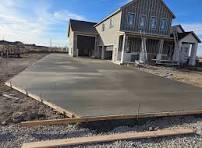
The driveway is more likely to be damaged than any other surface on your home. A driveway that is not properly installed will not last, thanks to the heat of San Joaquin Valley, seasonal rains, and the daily traffic. Concrete is a cheaper alternative that homeowners are increasingly choosing. Concrete driveways that are installed correctly combine the right base preparation with the correct mix ratios and expert finishing. These three factors can make a difference between a surface that lasts for 30 years and one that cracks in five. Companies such as Concrete Art LLC are experts in residential concrete drive installation, decorative concrete solutions and reinforced concrete drive installation for long-term durability.
Concrete driveways add real value too. Concrete flatwork is consistently ranked among the top exterior improvements in residential properties by the National Association of Home Builders.
Why Riverbank residents choose concrete driveways
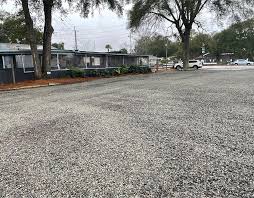
Asphalt will soften in temperatures exceeding triple digits during the summer. Gravel migrates, muddies and becomes muddy. Concrete is more durable, keeps its shape and requires less maintenance. In Lincoln where the climate is hot and dry in summer and mildly wet during winter, reinforced concrete driveways perform better over time than other alternatives. For homeowners looking for concrete flatwork, they often compare service areas like Lincoln Concrete Services in order to better understand the options and range of driveway construction.
Stanislaus County contractor, a licensed contractor, said it clearly: “In this area we recommend rebar or a wire mesh minimum of 4 inches for residential driveways.” The movement of the ground between seasons can cause thin slabs to crack quickly.
Which concrete driveway type is right for you?
| Types of | Avg. Cost per sq. | Durability | Best for | Maintenance |
| Standard broom finish | $6-$10 | 25-30 Years | Installs for the budget-conscious | Low-cost |
| Exposed aggregate | $8-$14 | 25-30 Years | Texture and slip resistance | Low-Medium |
| Decorative stamped | $12-$18 | 20-25 Years | Curb Appeal, Patterns | The Medium |
| Concrete resurfacing | $3-$7 | Aged 8-15 years | Repairing existing slabs | Low-cost |
The textured surface of exposed aggregate concrete is popular in Riverbank, as it can handle wet conditions and not become slippery. Stamped concrete is ideal for properties that are primarily concerned with appearance. The patterns mimic bricks or stones at a much lower cost. Resurfacing is a good option when an existing slab has a sound structure but shows surface wear. When the foundation is failing or if the layout requires a change, new driveway construction services should be considered. Stamped finishes can be designed to look like natural materials such as Flagstone, while still maintaining the strength and durability of poured concrete.
How to install a concrete driveway
Process is just as important as material. The installation process is logical and follows a set sequence. Skipping any steps will reduce the life of your driveway.
First, the site preparation. The crew excavates six to eight inches of soil, and grades the area. Poor grading can cause water to flow toward the foundation.
The base layer is then applied. The concrete is stabilized by compacted gravel that is typically four inches deep. Even a thick slab of concrete can crack if the ground moves.
The formwork determines the dimensions and shape. The crew places wire mesh or rebar inside the forms and installs them along the driveway perimeter. The steel can carry tensile forces that concrete alone is unable to handle. In modern concrete driveway construction, reinforcement materials like Rebar provide additional structural support.
Pouring and finishing are next. Pouring concrete continuously is the best way to avoid cold joints. Concrete should be ordered at the appropriate PSI (typically 3,500-4,000 PSI) for the application. Before the concrete sets, finishers screed and texture it.
Curing requires a minimum seven-day period. The Portland Cement Association claims that proper curing can increase concrete strength up to 50% when compared with slabs that are left to dry. Some contractors use a curing agent; others use wet plastic or burlap sheeting.
The slab is cut with control joints at 8-10 foot intervals to help guide cracking if any occurs. This method is far superior to random surface fractures.
What factors affect the price of concrete driveway installation?
Prices are more variable than homeowners think. Prices for a basic 400-square foot driveway in Riverbank can range from $2,400 up to $5,600, depending on what you choose.
Size, thickness and finish type are the biggest cost drivers. A decorative stamped finish can add $4 to $8 per sq. foot more than a standard broom finished. The demolition of an old slab will add $1 to $3 per sq. foot.
Access and grading difficulties can increase costs for sloped or narrow properties. If the site is hard to reach, delivery charges for ready-mixed concrete can increase by $150 to $300. The price difference between rebar and wire mesh is also significant. Rebar costs more, but offers stronger reinforcement for heavy vehicles such as RVs or trucks.
The cost of concrete driveway installation and repair in California is also influenced by local labor rates. Stanislaus County prices are slightly lower than the Bay Area averages, but higher than rural Central Valley. Expect to pay $50 to $75 an hour for flatwork crews.
Concreteartllc, a company that specializes in concrete flatwork, driveway resurfacing and custom concrete driveways for Riverbank, understands the local soil conditions, the permit process and can help you avoid any surprises during the project.
Concrete is not limited to standard pads. Homeowners who are looking for curb appeal and durability often request decorative concrete driveways or exposed aggregate finishes. Some homeowners are also researching driveway maintenance services like concrete driveway sealing services in Chatham IL, to protect the surface and extend its life.
What to look for when choosing a driveway paving contractor
It is rare that the lowest bidder will produce the best results on a concrete project. It is more important to look at the contractor’s past performance in flatwork, not construction as a whole.
Verify that the contractor has the necessary permits. In Riverbank driveway installations that change drainage or impervious surfaces often require an encroachment permit or grading permit from the City of Riverbank. Contractors who do not obtain permits shift the risk to you, as a homeowner.
Before signing any contract, ask about the concrete mix design, base thickness, and curing methods. Contractors who cannot answer these questions have probably not given them much thought. You can follow-up on references for concrete slab driveways completed in the past two years.
Insurance is important. Concrete flatwork requires heavy equipment, wet material, and finishing near foundations. Workers’ compensation and general liability coverage must be up-to-date and verified.
Concreteartllc, a contractor that specializes in concrete in Riverbank, will know the local permit requirements and the mix designs that work best in the Valley’s temperature fluctuations. They also carry the special insurance required by the trade.
Conclusion
Concrete is a practical investment you can make to improve the exterior of your home. You can avoid costly repairs by getting the mix design and base preparation right at the beginning. Concreteartllc can provide a free, on-site evaluation if you are planning to replace an old slab or build a new drive. Concreteartllc can help you choose the right materials, answer your questions about local permits, and provide an honest assessment of what you need for your project.
FAQ
The average reinforced concrete driveway installed in Riverbank will last 25 to 35 year with minimal maintenance. To manage the natural expansion and contracting of the climate in this valley, it is important to have a good base, use concrete with the correct PSI, cure properly, and place control joints.
The cost of a residential driveway in Riverbank varies between $6 and 12 per square foot, depending on the thickness, type of finish, and conditions at the site. A typical two-car driveway of 400-600 square feet costs between $2,400 and $7,200. The cost of decorative finishes and the demolition of an existing slab are higher.
Permits are based on the scope. A minor encroachment is often required by the City of Riverbank to replace an existing driveway. A new driveway that alters drainage patterns or increases the area of impervious surfaces may need to be reviewed further. As part of your project, the contractor should apply for permits.
For passenger cars, the minimum is four inches. If you want to build a driveway that can support heavy loads, such as RVs, trucks or delivery vehicles, then 5 to 6 inch with reinforced rebar is the best choice.
The surface cream is removed from exposed aggregate concrete driveways to reveal the stone beneath. This results in a slip-resistant, textured finish that is durable and conceals dirt better than smooth concrete. Although it costs slightly more, this is the best option for Riverbank properties.
Resurfacing is a good option when the slab’s structure is intact, but its surface is stained, worn or slightly cracked. Resurfacing can be a temporary fix if the base is failing or if cracks are visible through the entire slab. Your slab’s eligibility can be assessed by a contractor.
Most contractors recommend that you wait at least seven to 28 days prior to heavy vehicle traffic. According to curing guidelines established by the Portland Cement Association, concrete reaches 70% of its design strength within the first week. Full strength develops over the course of a month.
The cost of broom-finish concrete, with a colored release, or a simple edge of exposed aggregate is significantly lower than full stamping work. It still improves curb appeal. Before committing to any finish, discuss with your contractor the budget-conscious options available.
Most common causes include inadequate base compaction and slab thickness. Other factors are missing or incorrectly spaced control joint, as well as curing in hot weather. Another common culprit is tree roots at the edge of the driveway in older Riverbank homes.