Concrete Floor Polishing Near Me in Jacksonville, IL: A Guide
Get floors that last decades without waxing. Concrete floor polishing near me in Jacksonville, IL with honest pricing and real prep for Illinois conditions.
Your garage floor is covered in oil stains that won’t scrub out. The basement concrete is chalky, leaving dust on everything that touches it. You’ve thought about epoxy, but the peeling horror stories from neighbors made you pause. Concrete floor polishing near me in Jacksonville, IL is the option most homeowners don’t know exists — a permanent finish that transforms raw concrete into a hard, reflective surface without coatings that eventually fail. At Concrete Art LLC, we’ve polished enough floors across central Illinois to know what separates a floor that lasts 20 years from one that disappoints in two.
What Concrete Floor Polishing Actually Does
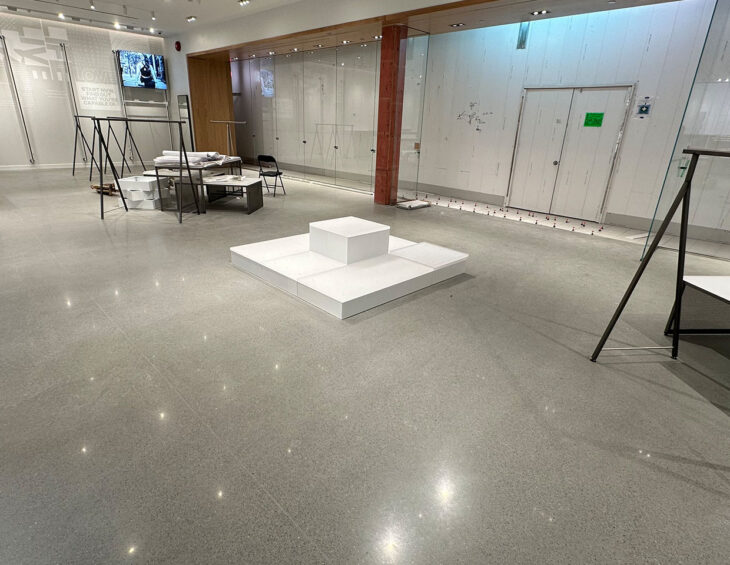
Concrete polishing is a mechanical process that grinds down the surface of existing concrete using progressively finer diamond abrasives, then hardens and seals it to create a dense, non-porous finish. The process starts with coarse metal-bond diamond grinding to remove surface imperfections, old coatings, and weak cement paste. Each subsequent pass uses finer grits — typically 80, 150, 200, 400, 800, and up to 3,000 for high-gloss finishes — until the concrete reaches the desired sheen level. A lithium silicate densifier is applied during the process to chemically harden the concrete by filling capillary pores, and a penetrating sealer locks out moisture and stains.
In Jacksonville, IL, we’ve noticed that most homeowners confuse polished concrete with sealed concrete or epoxy coatings. Sealed concrete gets a topical acrylic or urethane layer that sits on the surface and wears away with traffic. Epoxy creates a plastic skin that can delaminate if moisture pushes up from below. True mechanical polishing changes the concrete itself — the finish is the floor, not something applied on top of it. That distinction matters in Illinois, where freeze-thaw cycles and ground moisture create conditions that punish coatings.
The finish options range from a matte cream finish that shows minimal aggregate, to a salt-and-pepper exposure that reveals fine sand particles, to full aggregate exposure that brings larger stones to the surface. Gloss levels run from satin (400 grit) to high-gloss (1,500–3,000 grit) with measurable light reflectivity. Dyes and stains can add color during the process, though many homeowners in this area prefer the natural gray tone with subtle variation.
The Real Challenge in Jacksonville, IL
Central Illinois presents conditions that coastal and southern contractors rarely encounter. The clay-heavy soil around Jacksonville holds moisture year-round, and winter freeze-thaw cycles cause concrete slabs to expand and contract repeatedly. Spring rains saturate the ground, creating hydrostatic pressure that pushes vapor through porous concrete. Summer humidity keeps slabs damp for weeks. These factors don’t just affect coatings — they test the concrete itself and any finish applied to it.
A client in Jacksonville reached out when they noticed their three-year-old basement floor was developing white powdery spots and the sealer was turning cloudy. Their previous contractor had applied a topical acrylic sealer without addressing the moisture vapor transmission rate, which measured over 8 pounds per 1,000 square feet per 24 hours — well above the 3-pound threshold for coating success. We stripped the failing sealer, allowed the slab to breathe and dry, then performed mechanical polishing with densifier and a breathable penetrating sealer designed for high-moisture environments. Two years later, the floor is clean, dust-free, and shows no signs of moisture damage.
The objection most competitors ignore: “Will polishing work on my old, beat-up concrete?” Affordable concrete floor polishing near me in Jacksonville, IL is possible, but not every slab is a good candidate without repair. Severely spalled areas, deep cracks wider than a quarter inch, and slabs with extensive previous patching may need grinding and filling before polishing can begin. The gap in the market is honest assessment — telling homeowners when their concrete needs repair prep or when an overlay is the smarter choice, rather than polishing a damaged slab and hoping for the best.
How Concrete Art LLC Approaches It Differently
Most polishing contractors in the Midwest treat every job the same: show up with a grinder, run through the grit sequence, apply densifier, and leave. We don’t work that way. Every project starts with a Mohs hardness test to determine the concrete’s density, a moisture vapor emission test when conditions suggest it, and a visual assessment of aggregate exposure potential. Harder concrete polishes differently than soft concrete. Newer pours with high fly-ash content behave differently than older slabs with pure Portland cement.
Professional concrete floor polishing near me in Jacksonville, IL means adapting to the specific conditions of each slab rather than forcing a standardized process. We adjust our diamond tooling selection based on hardness readings, modify densifier application rates for porosity, and select sealers rated for the moisture conditions we measure. For residential basements in this area, we typically specify breathable penetrating sealers rather than film-forming products that trap vapor. For garage floors, we use harder-wearing densifier formulas that resist hot tire pickup and road salt staining.
Here’s the insight most generic articles never mention: your concrete’s curing history matters more than its age. Concrete polished too early — before the 28-day minimum cure — can dust and soften because the cement hydration process isn’t complete. Concrete that sat under plastic sheeting during curing may have a weak surface layer that requires deeper grinding to reach sound material. We’ve seen 5-year-old slabs that polish beautifully and 20-year-old slabs that fight every grit because of how they were originally finished. The age on the calendar tells you far less than the surface hardness and density readings.
Practical Tips: What to Know Before You Decide
If you’re comparing polishing quotes, ask specifically about the grit sequence, densifier brand and application method, sealer type, and whether crack repair and joint filling are included. Any contractor who can’t name their densifier or describe their moisture testing protocol is guessing. Polished concrete isn’t a mystery — it’s a process with established standards from the Concrete Polishing Association and measurable outcomes.
Working with clients in Jacksonville, IL, our team found that homeowners who get the best long-term results are the ones who understand maintenance before the job starts. Polished concrete is low-maintenance, not no-maintenance. Dry dust mopping removes abrasive grit that scratches the surface. Occasional damp mopping with pH-neutral cleaner maintains the sealer. Avoid acidic cleaners like vinegar or citrus degreasers — they etch the densified surface and dull the finish over time.
One local market-specific tip: Jacksonville’s hard water leaves mineral deposits on polished floors if they’re left wet to air-dry. The calcium and magnesium in central Illinois municipal water create white spotting on high-gloss finishes that looks like etching but wipes off with a mild acid-free cleaner. Drying floors with a microfiber mop rather than letting them air-dry prevents this entirely. It’s a small habit that keeps your floor looking new for years.
Trusted concrete floor polishing near me in Jacksonville, IL comes down to preparation discipline and honest material selection. If a quote seems too good to be true, it usually means shortcuts somewhere — fewer grinding steps, skipped densifier, cheap topical sealer instead of penetrating treatment, or no moisture testing. Each shortcut shows up within the first year as dusting, staining, or finish failure.
Why Polished Concrete Outlasts Every Coating Alternative
The difference between a floor you polish once and a floor you fight with for a decade isn’t luck — it’s process. Illinois climate punishes shortcuts harder than milder regions. The freeze-thaw cycles that crack your driveway are the same forces working against any coating that isn’t bonded to the concrete itself. A mechanically polished and densified floor has no coating to peel, no film to scratch through, no seam to fail.
Conclusion
If your garage, basement, or commercial floor is dusty, stained, or covered in a failing coating, mechanical polishing solves the problem at its source. Concrete Art LLC provides concrete floor polishing near me in Jacksonville, IL with the testing, preparation, and material selection that match what Illinois concrete actually needs. Schedule a free slab assessment and we’ll show you exactly what your floor can become.
FAQs
How much does concrete floor polishing cost in Jacksonville, IL?
Residential polishing typically runs $3–$8 per square foot depending on slab condition, desired gloss level, and whether crack repair or stain removal is needed. Large aggregate exposure and custom dye work add to the total. Quotes significantly below this range often skip densifier, use fewer grinding steps, or apply cheap topical sealers that fail within a year.
How do I know a concrete polishing contractor is legitimate and qualified?
Ask about their diamond grit sequence, densifier brand, moisture testing protocol, and whether they follow Concrete Polishing Association standards. Qualified contractors explain their process in detail, provide hardness and moisture readings, and show photos of local completed projects. Vague answers about “commercial-grade equipment” without specifics are a red flag.
Can all concrete floors be polished?
Not every slab is suitable. Severely spalled concrete, slabs with extensive previous patching, or floors with moisture vapor emission rates above 8 pounds per 1,000 square feet per day may need repair or alternative treatments first. A proper assessment determines whether polishing, grinding with overlay, or another approach is the right solution for your specific slab.
How long does concrete floor polishing take?
Most residential projects require 2–4 days depending on square footage, slab hardness, and desired finish level. Each grit pass must fully refine the surface before moving to the next step — rushing the sequence produces swirl marks and uneven gloss. Densifier needs cure time before final sealing. Proper timing matters more than speed.
Is polished concrete slippery?
Polished concrete meets or exceeds slip-resistance standards for hard flooring when kept clean and dry. The coefficient of friction on properly polished and densified concrete typically exceeds the 0.42 DCOF minimum required for indoor spaces. For areas prone to wet conditions, anti-slip additives can be incorporated into the sealer without affecting appearance.