Professional Concrete Polishing in Springfield, IL: Floor Guide
Improve concrete floors with professional polishing in Springfield, IL. Learn about grinding, densifying, gloss levels, repairs, maintenance, and preparation.
Concrete floors can become dusty, stained, uneven, or difficult to maintain after years of traffic. Polishing refines the existing slab into a smoother, denser, finished surface without covering it with traditional flooring. It can work well in homes, offices, retail spaces, warehouses, and garages when the concrete is suitable and prepared correctly.
Concrete Art LLC provides concrete polishing, coatings, sealing, and epoxy flooring for residential and commercial properties in Central Illinois. A successful project begins with the slab. Hardness, cracks, previous coatings, moisture, contamination, and the desired finish all influence grinding and refinement.
Professional polishing should therefore be planned around the existing concrete instead of applying one identical sequence to every floor.
What Professional Concrete Polishing Includes
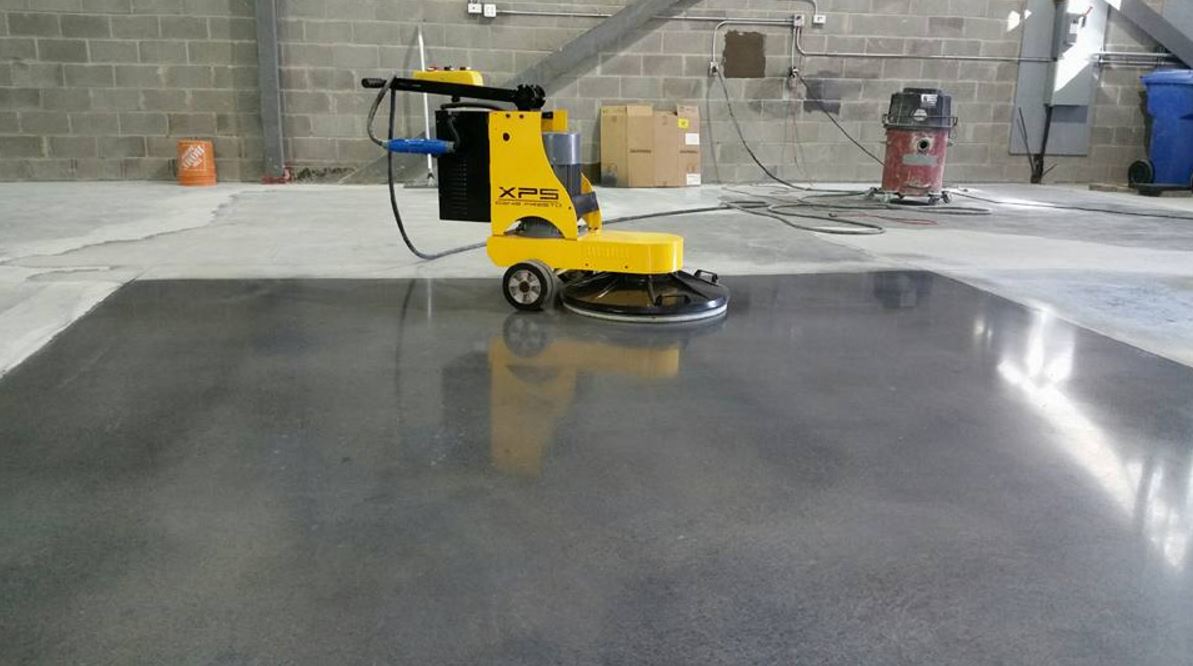
Professional concrete polishing services use progressively finer diamond tooling to refine the surface. Coarse grinding may remove imperfections, coatings, adhesives, or uneven areas. Finer stages then create the desired smoothness and reflectivity.
Depending on the floor, the work may include:
- Inspecting the slab
- Testing surface hardness
- Removing coatings or adhesives
- Repairing suitable cracks and joints
- Grinding the concrete
- Applying a densifier
- Refining with progressively finer tooling
- Selecting the desired aggregate exposure
- Applying a compatible guard or protective treatment
- Burnishing the finished surface
- Cleaning and reviewing the completed floor
The exact sequence depends on the slab and the appearance the property owner wants. Some floors require more preparation than others before polishing can begin.
Concrete Floor Polishing in Springfield, IL
Property owners considering concrete floor polishing in Springfield, IL should begin with an assessment of the existing slab. Concrete Art LLC has a dedicated Springfield polishing page describing residential, commercial, warehouse, basement, and industrial applications.
Surface condition matters because polishing refines the concrete itself. Unlike a thick coating, polishing often makes the slab’s natural character more visible.
Homeowners should mention previous coatings, stains, repairs, or moisture problems before work starts. Business owners should also explain expected traffic, equipment use, cleaning routines, and whether forklifts, carts, or other wheeled loads will operate on the floor.
These details help determine the most practical finish and preparation approach.
Why Slab Assessment Comes First
Concrete can vary significantly from one building to another. Two floors that look similar may have different hardness, porosity, repairs, aggregate, or previous treatments.
A contractor should inspect the slab before promising a specific finish. Cracks, spalling, soft areas, coatings, adhesives, moisture, and uneven repairs can affect the result.
The assessment can also help determine whether polishing is the right approach. Some damaged floors may need repair, resurfacing, or another system before refinement begins.
This step protects expectations. Property owners should understand what natural variations may remain visible after polishing and which defects can be improved before the finished surface is created.
Understanding Aggregate Exposure
Concrete polishing can reveal different amounts of the stone and sand inside the slab. The exposure level influences the final appearance.
A light polish may preserve more of the original surface, while deeper grinding can expose fine sand or larger aggregate. The achievable result depends on how the concrete was placed and finished.
Property owners should discuss the desired appearance before grinding begins because deeper exposure cannot simply be reversed later.
Samples can explain the differences, but every slab has its own aggregate distribution. A professional should not promise an exact match to another project without evaluating the concrete first.
Why Concrete Densifier Matters
A densifier is commonly used during polishing to react with the concrete and help harden the surface. It supports the refinement process by reducing porosity and improving surface density.
Densifier is not a decorative coating sitting on top of the slab. It works within the concrete surface as part of the polishing system.
The timing and amount of application can vary depending on porosity and floor condition. Highly absorbent slabs may behave differently from dense, newer concrete.
A properly densified and polished surface can be easier to maintain than untreated dusty concrete, but it still requires routine cleaning appropriate for the finished floor.
Crack and Joint Repair Before Polishing
Cracks and control joints deserve attention before the final polishing stages.
Some cracks can be cleaned and filled with compatible materials so loose edges or debris do not affect the finished surface. Control joints may also be filled where wheeled traffic could damage joint edges.
Repairs should be discussed as part of the visual plan because fillers can remain visible after polishing. Matching a repair perfectly to natural concrete is not always possible.
Structural movement is a different concern. Polishing or filling a crack does not correct active settlement or major structural problems. Those conditions should be evaluated separately before decorative finishing proceeds.
Removing Old Coatings and Adhesives
Existing paint, epoxy, glue, sealer, or flooring adhesive may need removal before concrete can be polished.
Mechanical grinding is often used to expose the underlying slab, but the amount of work depends on the material and how strongly it is bonded.
Removing an old covering can also reveal stains, patches, cracks, and color differences that were previously hidden.
The contractor should reassess the slab after old material is removed because conditions beneath carpet, tile, or coating cannot always be confirmed beforehand.
Planning for this possibility helps keep the project realistic and reduces surprise when concealed concrete becomes visible.
Commercial Concrete Polishing in Rochester, IL
Businesses considering commercial concrete polishing in Rochester, IL can use polished concrete for warehouses, retail spaces, offices, and other high-use interiors where durability and straightforward maintenance are priorities.
Concrete Art LLC’s Rochester content focuses specifically on commercial polishing and discusses slab assessment, traffic demands, joint conditions, densification, and maintenance planning.
Commercial floors should be specified around how the building operates. A warehouse with forklifts has different needs from a retail showroom or office.
Traffic paths, wheel loads, chemicals, entry areas, cleaning equipment, and desired gloss should all be considered before the final polishing level is selected.
A practical commercial finish should balance appearance with maintenance and real operational demands.
Choosing the Right Gloss Level
Polished concrete can range from a low-sheen finish to a highly reflective surface.
Higher gloss can create a bright, refined appearance, especially in retail or showroom environments. Lower gloss may be preferred in industrial or utility spaces where appearance is less important than straightforward maintenance.
Gloss should not be chosen only from a photograph. Lighting, aggregate exposure, slab color, traffic, and maintenance can all influence how the finished floor looks.
Property owners should also discuss traction. Spills, water, dust, oil, and other contaminants can make any hard floor slippery.
The selected finish should reflect how the space is used.
Polished Concrete for Residential Interiors
Polished concrete can work in basements, kitchens, living areas, garages, and other residential spaces where the slab is suitable.
Homeowners often choose it because the existing concrete becomes the finished floor rather than being hidden under another material.
The look can range from understated and natural to more decorative depending on exposure, stain or dye options, and gloss level.
Before choosing polished concrete, homeowners should consider comfort, furniture placement, and whether area rugs will be used.
They should also understand that natural variations, repairs, and aggregate patterns can become part of the finished appearance rather than disappearing completely.
Maintenance After Polishing
Polished concrete is relatively straightforward to maintain, but it is not maintenance free.
Loose grit should be removed because abrasive particles can dull the surface over time. Routine cleaning can usually be completed with appropriate neutral cleaners and microfiber or suitable floor equipment.
Harsh chemicals, acidic cleaners, or products that leave heavy residue should be avoided unless they are specifically compatible with the floor system.
Commercial spaces may benefit from periodic burnishing depending on traffic and desired appearance.
Entry mats can also reduce the amount of dirt, moisture, and abrasive material tracked onto the floor.
A simple maintenance plan helps protect both gloss and cleanliness without relying on constant waxing or decorative recoating.
Moisture and Concrete Floors
Concrete can transmit moisture from below, especially in slabs on the ground. Moisture should be considered before applying repairs, guards, or related treatments.
Visible dampness, recurring efflorescence, or previous flooring failures should be mentioned before work begins.
Polishing itself does not fix drainage, groundwater, or vapor problems. If moisture is excessive, additional investigation may be appropriate.
Understanding the slab condition before finishing helps reduce the chance that a hidden moisture issue is mistaken for a polishing defect later.
Dust Control During Grinding
Grinding concrete creates fine dust, so professional dust control is an important part of the project.
Modern grinding equipment can be connected to appropriate dust extraction systems that capture much of the material at the source.
Work areas may still need protection depending on the building and project size. Doors, equipment, stored items, and adjacent spaces should be considered before grinding starts.
For occupied businesses, scheduling may also need to account for noise, access, and operational disruption.
Homeowners should ask how dust will be controlled and what preparation they need to complete before the crew arrives.
Questions to Ask Before Choosing Concrete Polishing
Before approving a project, ask clear questions about the proposed process.
Useful questions include:
- What condition is the existing slab in?
- Are old coatings being removed?
- How will cracks and joints be handled?
- What aggregate exposure is realistic?
- What gloss level is recommended?
- Will a densifier be used?
- How is dust controlled?
- Is moisture evaluation needed?
- What areas require extra repair?
- How long should the floor remain unused?
- What cleaning products are recommended?
- Will commercial floors need periodic burnishing?
Clear answers help property owners compare complete polishing systems instead of focusing only on the final shine.
Conclusion
Concrete polishing can transform an ordinary slab into a durable, finished floor when the process is matched to the actual condition of the concrete.
The strongest projects begin with careful inspection, coating removal where needed, crack and joint preparation, controlled grinding, densification, progressive refinement, and a realistic choice of aggregate exposure and gloss.
Residential and commercial properties have different priorities, so traffic, maintenance, equipment, appearance, and everyday use should guide the specification.
Polished concrete also benefits from simple ongoing care. Removing abrasive dirt, using compatible cleaners, controlling spills, and burnishing high-traffic areas when needed can help preserve the finish.
When preparation and expectations are handled correctly, the existing slab can become a practical, attractive flooring surface without unnecessary layers or complicated maintenance.
Frequently Asked Questions
What is concrete polishing?
Concrete polishing is a mechanical process that uses progressively finer diamond tooling to grind, densify, and refine a concrete slab until it reaches the desired smoothness, aggregate exposure, and sheen.
Can every concrete floor be polished?
Not every slab is an ideal candidate. Severe structural damage, excessive deterioration, moisture problems, or certain surface conditions may require repair or another flooring solution before polishing.
Does polished concrete need a coating?
Polished concrete gets its primary finish from mechanically refining the slab itself. Densifiers and compatible protective guards may be used, but the surface is not created by a thick decorative coating.
Can old epoxy or adhesive be removed before polishing?
Often, yes. Existing coatings and adhesives can frequently be mechanically removed, although the condition of the concrete underneath may not be fully known until the old material is gone.
Is polished concrete difficult to maintain?
Routine maintenance is generally simple. Remove abrasive dirt, clean with compatible neutral products, address spills promptly, and consider periodic burnishing in high-traffic commercial areas.
How do I choose the right polished concrete finish?
Consider the slab condition, desired aggregate exposure, gloss level, traffic, lighting, maintenance expectations, and how the room will be used. A professional assessment helps establish realistic options.