Concrete Floor Coatings in Rochester, IL | Concrete Art
Get durable concrete floor coatings in Rochester, IL. Concrete Art LLC protects and beautifies garage and basement floors. Request your free estimate today.
Your garage floor is stained with oil, salt, and years of grime. The concrete in your basement is dusty, cracked, and cold underfoot. You’ve thought about painting it, but every DIY epoxy kit you’ve seen at the hardware store ends up peeling within a year. You want something that looks professional, holds up to real use, and doesn’t require reapplication every spring. At Concrete Art LLC, we coat floors across central Illinois, and we know the difference between a weekend project and a coating that actually lasts. Concrete floor coatings in Rochester, IL aren’t just about appearance. They’re about protecting the surface underneath from moisture, chemicals, and the freeze-thaw cycles that destroy unsealed concrete.
What Concrete Floor Coatings Actually Are
Concrete floor coatings are resin-based systems applied to prepared concrete surfaces to create a protective, decorative finish. The most common types are epoxy, polyurea, and polyaspartic. Epoxy is the traditional choice: thick, durable, and available in solid colors and flake blends. Polyurea and polyaspartic cure faster, resist UV yellowing better, and handle temperature swings more gracefully. In Rochester, we’ve noticed that most homeowners start with epoxy because it’s familiar and widely available. That isn’t always the right choice for our climate.
The Illinois climate is especially hard on concrete. Winter brings road salt, freeze-thaw cycles, and moisture intrusion. Summer brings humidity and rapid temperature changes in garages that aren’t climate-controlled. Trusted concrete floor coatings in Rochester, IL means selecting a system rated for these conditions, preparing the surface correctly with industrial grinding equipment, and applying the material at the right temperature and humidity for proper curing. A coating applied over dirty, poorly etched concrete will fail no matter how expensive the product is. Surface preparation includes grinding or shot-blasting to create a concrete surface profile, or CSP, that allows the resin to mechanically bond. Acid etching, the method most DIY kits recommend, only cleans the surface. It does not create the anchor pattern that industrial coatings require for long-term adhesion.
The Real Challenge in Rochester
Rochester is a small community just outside Springfield, which means most contractors serving the area also cover Sangamon County and the broader central Illinois region. The real challenge here is finding a contractor who treats your single garage or basement with the same care they’d give a commercial warehouse floor. Many companies prioritize volume over quality. They show up, acid-wash the surface, roll on a thin coat of epoxy, and leave before the bubbles and roller marks dry.
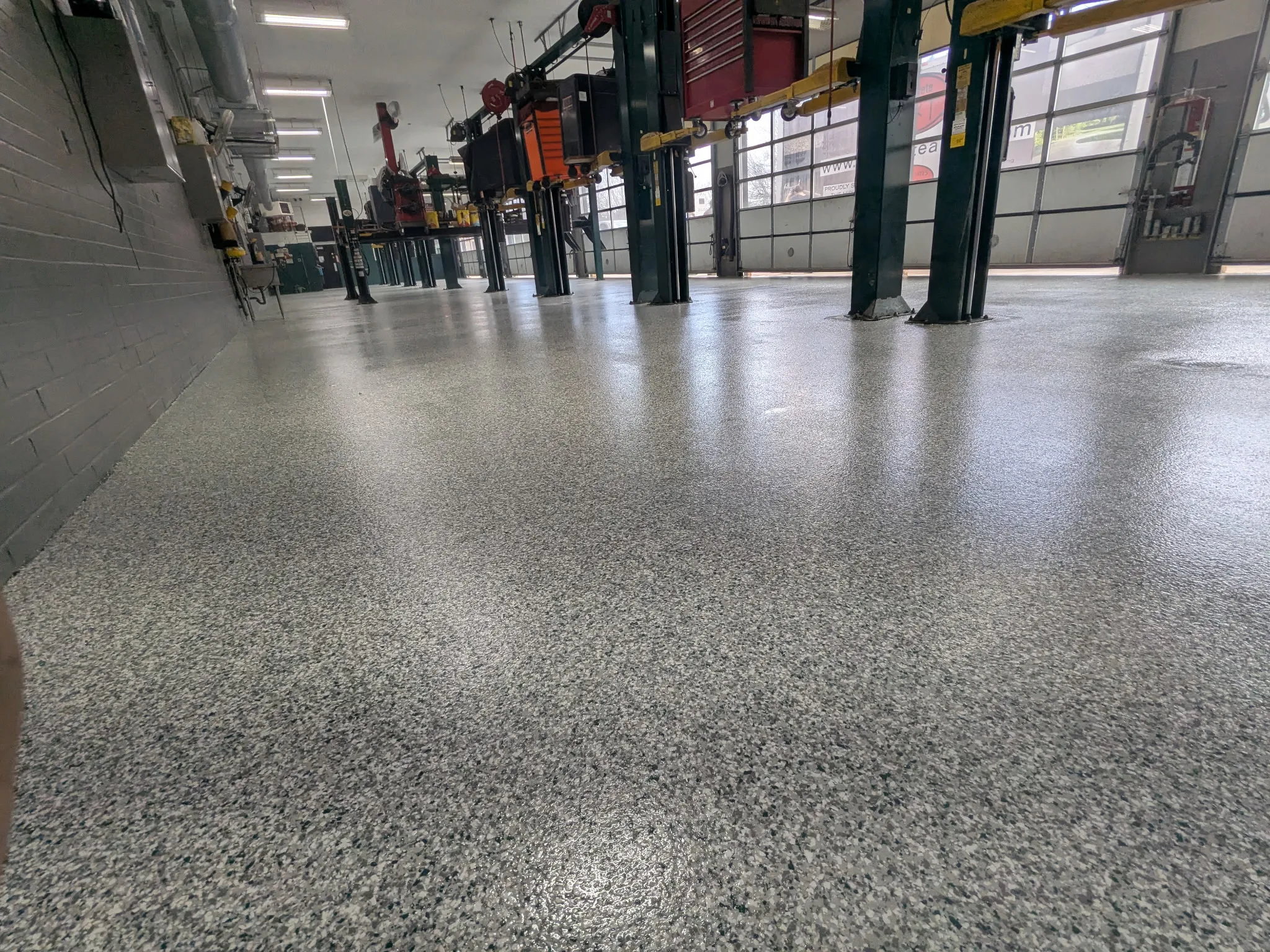
A client Professional concrete floor coatings in Rochester, IL reached out when they noticed their DIY epoxy floor was peeling in sheets after one winter. They had followed the kit instructions exactly: cleaned the floor, etched with acid, and applied two coats. The problem was that acid etching doesn’t create the surface profile that industrial coatings need to bond. Moisture vapor from the soil below pushed through the porous concrete, lifted the coating, and turned it into a peeling mess. We ground the concrete to a CSP-3 profile, applied a moisture-mitigating primer, and installed a polyaspartic system with decorative flake. Two years later, the floor still looks new.
This is the objection most competitors ignore: surface preparation is 80 percent of the job. Any contractor you trust with this work should explain their prep process, show you the equipment they use, and guarantee their adhesion. Most don’t, because proper grinding is noisy, dusty, and time-consuming. Rolling epoxy over a dirty floor is faster and cheaper, which is why so many budget jobs fail within months. The best contractors in this field treat surface prep as non-negotiable because they know the coating is only as good as the bond beneath it.
How Concrete Art LLC Approaches It Differently
Most coating contractors Affordable concrete floor coatings in Rochester, IL area work on volume. They schedule multiple jobs per day, send a two-person crew, and rely on acid etching or light sanding instead of true mechanical preparation. Our team starts with moisture testing. We use calcium chloride tests or in-situ relative humidity probes to measure vapor emission rates before selecting a system. In Rochester specifically, we understand the local soil conditions: clay-heavy subsoils that hold moisture, basements with hydrostatic pressure, and garages built on fill dirt that settles and cracks over time.
The competitor gap here is significant. Generic articles tell you to “clean and etch the floor” and “apply in temperatures above 50 degrees,” but almost nobody explains how to test for moisture vapor transmission or why polyaspartic outperforms epoxy in garages that see direct sunlight. The best results come from contractors who diamond-grind the surface, repair cracks with structural fillers, and apply primers designed for your specific vapor emission rate. We include these steps because a coating that peels in year two costs more than doing it right the first time.
Practical Tips: What to Know Before You Decide
If you’re considering a concrete floor coating, start with a moisture test. Tape a piece of plastic sheeting to the floor and leave it for 24 hours. If condensation forms underneath, you have a moisture issue that needs addressing before any coating goes down. This simple test costs nothing and saves you from applying a coating that will fail from the bottom up.
Working with clients in Rochester, our team found that many people underestimate the curing time. Epoxy needs 72 hours before vehicle traffic. Polyaspartic cures in 24 hours but costs more. Rushing the cure by driving on the floor too early leaves permanent tire marks and compromises the finish. Plan your installation around a weekend or vacation when the space can stay empty.
One local tip specific to Rochester: consider the timing of your installation. Late spring through early fall offers the best temperature and humidity windows for coating application. Winter installations in unheated garages are risky because the concrete is cold, moisture levels are high, and curing slows dramatically. If you must coat in winter, the space needs to be heated to at least 60 degrees for 48 hours before and after application. Space heaters work, but they must be the indirect type that doesn’t introduce fumes or moisture into the curing environment.
Another consideration: think about slip resistance. Smooth epoxy looks great but becomes slick when wet. Decorative flake systems add texture and visual depth while improving traction. For basements and garages where water, snow, or oil are common, a slip-resistant additive is worth the small extra cost. It doesn’t change the appearance much, but it prevents the accidents that happen when a wet floor meets smooth resin.
Your Next Step for a Floor That Actually Holds Up
A properly coated concrete floor should make your space easier to clean, more pleasant to use, and more resistant to the abuse that daily life throws at it. The right system protects your concrete, improves the look of your home, and saves you from the cycle of painting and repainting every few years.
Conclusion
If you’re ready to stop dealing with stained, dusty concrete, reach out to Concrete Art LLC. We’ll test your surface, explain which concrete floor coatings in Rochester, IL make sense for your conditions, and make sure the job gets done with the proper preparation and care it deserves.
FAQs
How much do concrete floor coatings cost in Rochester, IL?
Costs depend on square footage, surface condition, and coating type. A standard two-car garage typically runs $1,500 to $3,500 for epoxy with decorative flake. Polyaspartic systems range from $2,500 to $5,000. Heavily damaged floors requiring crack repair or moisture mitigation add to the cost. We provide written estimates after an on-site evaluation.
How do I know a concrete coating contractor is legitimate?
Check for an Illinois contractor registration and general liability insurance. Ask how they prepare surfaces: diamond grinding, shot-blasting, or acid etching. A legitimate contractor explains their prep process, shows you their equipment, and provides a written warranty. They also discuss moisture testing and cure times before quoting.
How long do concrete floor coatings last?
Quality epoxy systems last 5 to 10 years in residential garages with proper care. Polyaspartic systems typically last 10 to 15 years. Lifespan depends on surface preparation quality, traffic level, and exposure to chemicals or UV light. Regular cleaning and avoiding harsh solvents extend the coating’s life significantly.
Can I apply a concrete coating myself?
DIY epoxy kits are available, but results vary dramatically. Most kits use thin, water-based epoxy that lacks the durability of professional-grade systems. Surface preparation is the most critical step, and rental grinders rarely achieve the surface profile that commercial coatings require. Professional installation includes moisture testing, crack repair, and warranty coverage.
What’s the difference between epoxy and polyaspartic coatings?
Epoxy is thicker, more affordable, and offers excellent chemical resistance, but it yellows in UV light and takes longer to cure. Polyaspartic cures in hours, resists UV yellowing, and handles temperature swings better, but it costs more and requires faster application technique. The right choice depends on your budget, timeline, and how the space will be used.