Garage Concrete Polishing in Lincoln, IL: A Homeowner’s Guide
Transform your stained garage floor into a durable, easy-clean surface. Garage concrete polishing in Lincoln, IL from local pros who understand Midwest conditions.
Your garage floor is stained with oil, salt, and years of abuse. Every spring you power-wash it, and by fall it looks worse than before. You’ve thought about epoxy, about paint, about just throwing down mats and pretending the concrete isn’t there. But there’s another option that most homeowners in central Illinois haven’t considered, and it lasts longer than coatings without the peeling or reapplication headaches. This perspective comes from Concrete art llc, a team that’s spent years working with homeowners across the Midwest on garage concrete polishing in Lincoln, IL. If you’re trying to figure out why your neighbor’s epoxy floor is already chipping or what actually holds up through Illinois winters, here’s what experience has taught us.
What Garage Concrete Polishing Actually Means in Lincoln
Concrete polishing is a mechanical process where diamond abrasives grind and hone a concrete surface through progressively finer grits until it reaches a smooth, reflective finish. A densifier hardens the concrete internally, and a guard or sealer protects the surface from stains and abrasion. In Lincoln, IL, this process matters because the concrete here faces a combination of freeze-thaw cycles, road salt, and agricultural chemicals that destroy lesser finishes.
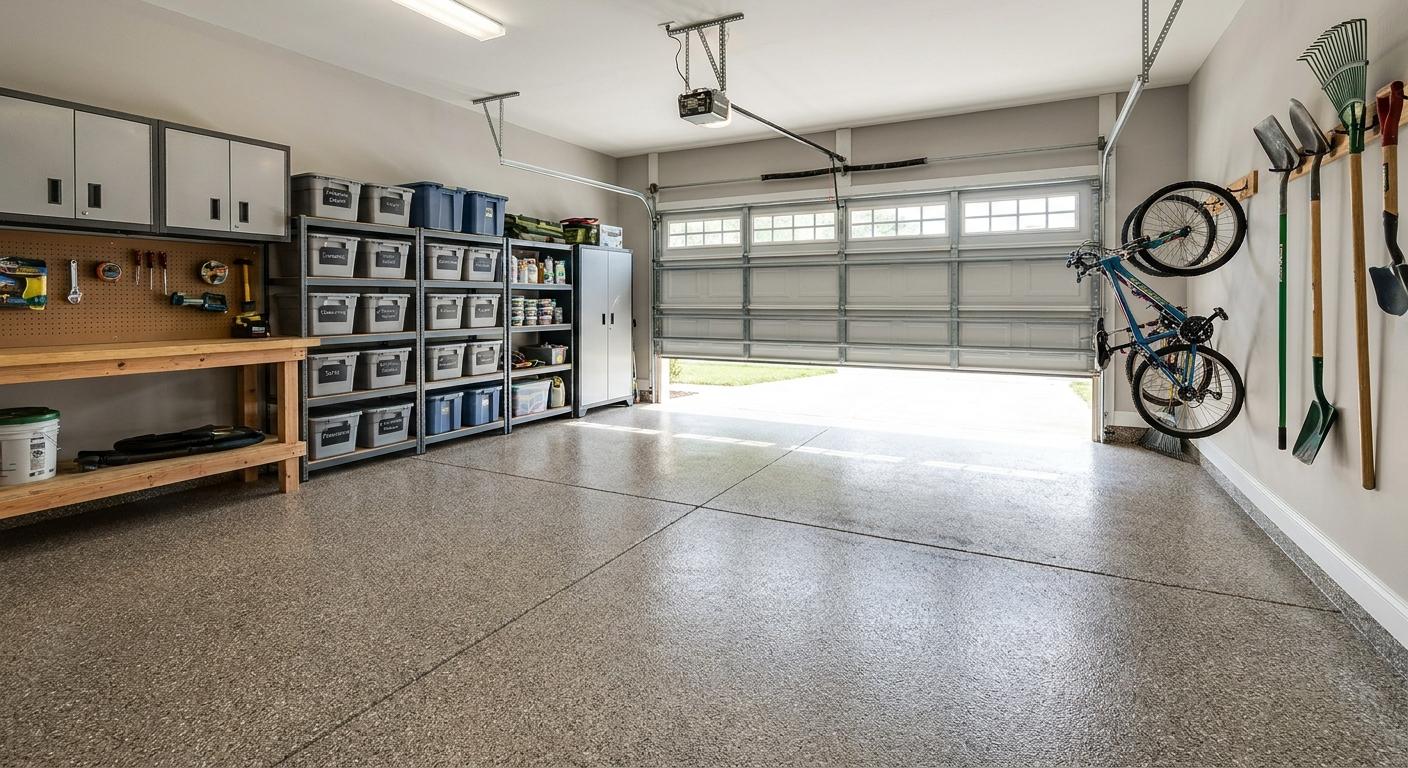
Residential Garage concrete polishing in Lincoln, IL we’ve noticed that most homeowners assume polished concrete is only for commercial warehouses or big-box stores. They don’t realize how well it works in residential garages, workshops, and basements. The finish is harder than epoxy, won’t peel or bubble, and requires no reapplication every few years. A professional garage concrete polishing job transforms raw concrete into a surface that resists oil, brake fluid, and the calcium chloride that eats through everything else during Illinois winters.
Key benefits of polished concrete for Lincoln garages:
- No peeling, chipping, or delamination like epoxy or paint
- Resists road salt, oil, and most automotive chemicals
- Reflects light, brightening dark garage interiors
- Requires only damp mopping and occasional re-burnishing
- Lasts 15 to 20 years with minimal maintenance
The Real Challenge in Lincoln
The biggest obstacle isn’t the cost or the appearance. It is finding someone who understands what central Illinois conditions do to concrete over time. Lincoln sits in Logan County, where the soil is a mix of clay and silt loam that expands and contracts with moisture. That movement creates micro-cracking in garage slabs that coatings hide for a year or two, then magnify when they trap moisture and delaminate. The freeze-thaw cycles here, with temperatures swinging from single digits to the 40s within a week, put enormous stress on any surface treatment that isn’t integral to the concrete itself.
A client Affordable Garage concrete polishing in Lincoln, IL reached out when they noticed their three-year-old epoxy garage floor was bubbling along the edges where the slab met the foundation wall. The previous installer had skipped moisture testing, had applied the coating in October when ground temperatures were already dropping, and had used a single-coat system with no primer. The fix required grinding off the failed epoxy, repairing the underlying concrete cracks, and polishing the slab to a satin finish that wouldn’t trap moisture or peel with seasonal movement. The project cost more than the original epoxy job, but the homeowner hasn’t touched the floor in six years and it still looks the same.
Here is the objection most competitors never answer honestly: “Will polished concrete actually hold up to hot tires, jack stands, and winter salt?” The truth is, a properly polished and densified concrete floor is harder than the tires rolling across it. The densifier reacts chemically with the calcium hydroxide in the concrete to create calcium silicate hydrate, which is the same compound that gives concrete its strength. A trusted garage concrete polishing service specifies the right densifier for your concrete’s age and hardness, applies it at the correct grit stage, and burnishes it to lock in the protection. Epoxy sits on top. Polishing becomes part of the floor.
How Concrete art llc Approaches It Differently
Most concrete coating contractors in the Springfield-Decatur area run a product-first model: sell the epoxy kit, prep quickly, apply, collect payment. Concrete art llc treats every garage floor as a concrete restoration project first and a finish project second. Before any grinder touches the slab, the team tests concrete hardness with a Mohs scratch test, identifies existing sealers or curing compounds that could interfere, and maps out cracks, spalls, and low spots that need repair before polishing begins.
What sets this approach apart in Lincoln specifically is the understanding of agricultural and rural garage conditions. Many homes in Logan County have garages that double as workshops, equipment storage, or small engine repair spaces. These floors see hydraulic fluid, fertilizer, diesel, and heavy loads that suburban garages never encounter. The best garage concrete polishing in Lincoln, IL includes patching with polymer-modified repair mortars, joint filling with semi-rigid polyurea, and a higher-gloss finish in work areas where light reflection matters. Contractors who treat a rural garage like a suburban two-car stall miss these details and deliver floors that fail under real use.
Here is an insight generic articles never mention: the age of your concrete slab dramatically affects how it polishes and what finish it can achieve. New concrete, less than a year old, is too soft to take a high polish and will dust for months. Very old concrete, 40-plus years, may have aggregate exposure that changes the appearance and requires a different grit sequence. A contractor who doesn’t adjust their diamond tooling and densifier selection for your specific slab’s age and hardness is guessing, and guessing leaves you with a floor that either never reaches its potential or fails prematurely. This is the kind of detail that separates experienced concrete polishers from coating crews who bought a grinder last month.
Practical Tips: What to Know Before You Decide
Working with clients in Lincoln, our team found that the homeowners who get the best long-term results share one habit: they inspect the contractor’s previous work in person, not just through photos. A photo hides swirl marks, inconsistent gloss, and patchy densifier application. Walking on a floor that was polished two or three years ago tells you whether the system was specified and applied correctly. Ask to see a local reference project that has survived at least two Illinois winters.
One local market-specific tip: Lincoln’s rapid temperature swings between seasons create condensation on garage floors, especially in unheated spaces. This moisture can interfere with coatings and cause slip hazards on polished floors if the wrong sealer is used. An affordable garage concrete polishing job includes a penetrating or breathable sealer that allows moisture vapor to escape while resisting stains, not a film-forming sealer that traps water and turns cloudy. Ask your contractor specifically what sealer they use and whether it is rated for freeze-thaw exposure.
Before signing a contract, verify these details:
- The contractor carries Illinois business licensing and general liability insurance
- They use industrial-grade planetary grinders, not hand-held angle grinders
- The scope specifies concrete hardness testing, crack repair, and densifier type
- They provide a written warranty covering delamination, dusting, and gloss retention
- The project timeline accounts for cure times between repair and polishing stages
Also, ask whether the quote includes oil stain removal, crack repair, and joint filling. These are separate processes that affect the final appearance and durability, and contractors who bury them in a single-line price often skip them or use inferior materials.
Ready for a Garage Floor That Actually Lasts?
A polished concrete floor is one of the most cost-effective upgrades you can make to your Lincoln garage, but only if the process is tailored to your specific slab and the conditions it will face. Start by defining what your floor needs to handle: vehicle traffic, chemical exposure, heavy equipment, or all three. Get multiple estimates, but pay attention to how thoroughly each contractor inspects your concrete before recommending a system. The ones who test, measure, and explain before they quote are usually the ones who deliver floors that stay glossy and intact for a decade or more.
Conclusion
Concrete art llc offers garage concrete polishing in Lincoln, IL with a process built around concrete assessment, climate-appropriate materials, and finishing protocols designed for Midwest freeze-thaw conditions. If you are ready to stop looking at stained, cracking concrete and start enjoying a floor that actually performs, reach out for an assessment and get a clear picture of what your garage actually needs.
FAQs
How long does garage concrete polishing take in Lincoln, IL?
Most residential garage polishing projects in Lincoln take two to four days depending on slab condition and square footage. Repair work for cracks, spalls, or oil stains adds time. Each grit stage requires full coverage before moving to the next. A contractor who promises same-day completion is skipping critical preparation or using inferior tooling.
How much does garage concrete polishing cost in Lincoln, IL?
A standard two-car garage in Lincoln typically runs between $2,500 and $4,500 depending on floor condition, repair needs, and desired gloss level. Larger spaces, extensive crack repair, or decorative staining add to the total. Professional garage concrete polishing includes proper prep, densification, and warranty coverage that DIY kits cannot match.
How do I know a concrete polisher is legitimate in Lincoln?
Verify their Illinois business registration and general liability insurance. Ask for local references from completed Lincoln projects that have been down for at least two years. A legitimate contractor uses industrial planetary grinders, provides written warranties, and explains their process in detail. Be wary of anyone who quotes over the phone without seeing your floor.
What causes polished concrete to fail in Illinois winters?
Failure usually traces back to inadequate densification, wrong sealer selection, or skipped repairs. Freeze-thaw cycles exploit cracks and spalls that weren’t patched. Film-forming sealers trap moisture and turn cloudy or peel. Insufficient grinding leaves the surface too porous to resist salt and chemicals. Proper specification and application prevent these issues entirely.
How long does a polished garage floor last in Lincoln?
A properly polished and densified garage floor lasts 15 to 20 years in Lincoln’s climate. Lifespan depends on traffic level, chemical exposure, and whether the sealer is maintained with periodic re-burnishing. Annual cleaning with neutral pH cleaner extends performance. Floors that skip densifier or use wrong sealers may show wear within 3 to 5 years.