Residential Concrete Polishing in Chatham, IL: A Homeowner’s Guide
Get durable, beautiful floors with residential concrete polishing in Chatham, IL. Learn what local homeowners should know before starting their project.
Your garage floor has seen better days. The basement is dusty, stained, and you’re tired of looking at it. For homeowners across central Illinois, residential concrete polishing in Chatham, IL offers a real alternative to epoxy coatings or tearing everything out and starting over. Concrete Art LLC has been working with polished concrete long enough to know what actually holds up in this climate and what falls apart after two winters. This article shares what we’ve learned, what to watch for, and how to get floors that last.
What Residential Concrete Polishing Actually Does
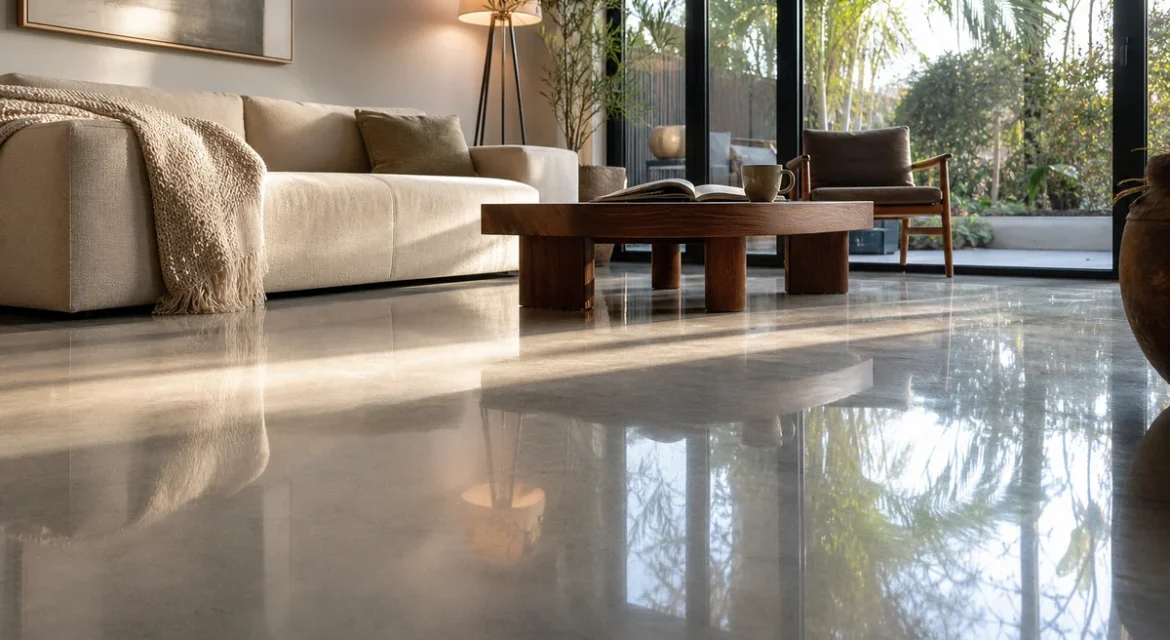
Polished concrete is not a coating you paint on top. It is a mechanical process where a concrete slab gets ground down with diamond abrasives, then hardened and polished to a smooth, reflective finish. The result is a floor that resists stains, does not chip like epoxy, and handles foot traffic without showing wear.
In Chatham, IL, we’ve noticed that most homeowners come to us after trying sealers or paints that peeled within a year. The freeze-thaw cycles here are hard on topical coatings. Polished concrete works differently because it changes the surface itself rather than adding a layer on top. That matters when temperatures swing from single digits to sixty degrees inside a garage over the course of a season.
The process typically involves three phases: coarse grinding to remove old stains and level the surface, application of a densifier that reacts chemically with the concrete to harden it, and fine polishing to the desired sheen level. Homeowners usually choose between a matte finish, a satin sheen, or a high-gloss reflective surface depending on the room and their preference.
The Real Challenge in Chatham, IL
The biggest obstacle homeowners face is not the polishing itself. It is finding someone who understands how Chatham’s soil and climate affect concrete slabs over time. Much of the area sits on clay-heavy soil that shifts with moisture changes. That movement creates hairline cracks, slight unevenness, and surface imperfections that a generic polishing crew might gloss over or ignore.
A client of residential concrete polishing in Chatham, IL reached out when they noticed their newly polished basement floor was developing patchy dull spots six months after another company finished the job. The previous contractor had skipped densifier application in corners and had used a one-size-fits-all grit sequence that did not account for the softer aggregate common in older Chatham-area pours. We had to regrind the entire surface and start the process correctly. The fix was possible, but it cost more than doing it right the first time would have.
Here is the objection most competitors never answer directly: polished concrete is not maintenance-free. It is low-maintenance, but it still needs occasional re-burnishing in high-traffic areas and prompt cleanup of acidic spills like vinegar or pet urine. Companies that promise “zero maintenance” are setting homeowners up for disappointment. We tell people the truth so they know what they are buying.
How Concrete Art LLC Approaches It Differently
Concrete Art LLC does not book a job and send a crew with a standard machine setting. We test the slab hardness first, because concrete poured in Chatham in the 1970s behaves differently than a 2010 pour with modern admixtures. Hardness determines which diamond tooling we start with and how we sequence the grits. Skip that step and you either waste time or damage the floor.
We also account for Chatham’s seasonal humidity swings. In summer, concrete absorbs ambient moisture and softens slightly. In winter, indoor heating pulls that moisture out and the surface hardens. Our densifier selection and application timing factor that in. Most articles about polished concrete never mention this, but it directly affects how the floor cures and how long the shine lasts.
Working with clients in Chatham, IL, our team found that garages converted to workshops or home gyms need a different finish than basement living spaces. A high-gloss polish looks great in a finished basement but can be too slippery for a garage where snow melt and road salt get tracked in. We adjust the final grit and sometimes add a light topical guard in those cases. That kind of location-specific thinking is what separates a lasting job from one that needs attention in three years.
Practical Tips: What to Know Before You Decide
Before you hire anyone for affordable residential concrete polishing in Chatham, IL, walk through these points.
Check the age and condition of your slab first. If it is less than 28 days old, it is not ready. If it has major structural cracks or heaving from soil movement, polishing will not fix that. Those issues need repair before any surface work begins.
Ask about the densifier brand and application method. Cheap sodium silicate densifiers work, but lithium-based options penetrate deeper and perform better over time in climates like ours. A contractor who cannot tell you the difference is a red flag.
Get a realistic timeline. A typical 1,000-square-foot residential job takes two to three days for grinding, densifying, and polishing, plus 24 hours of cure time before you can move furniture back. Anyone promising same-day completion is cutting corners.
One local market-specific tip: if your home was built before 1990, ask whether the slab contains fly ash or other supplementary cementitious materials. These were common in central Illinois construction and can affect how the concrete responds to grinding and densification. An experienced contractor will know how to adjust for it.
What to Expect Once Your Floors Are Polished
A properly polished concrete floor should look better at year five than a coated floor looks at year two. You will sweep and damp-mop for routine cleaning. No waxing is required. In basements, the reflective surface bounces light around and makes the space feel larger. In garages, it resists oil and chemical stains far better than raw concrete.
If you are considering professional residential concrete polishing in Chatham, IL, start with a slab assessment. Know what you are working with before you commit. The right preparation and the right process make the difference between a floor you enjoy and one you regret.
Conclusion
Concrete Art LLC handles residential concrete polishing in Chatham, IL with the understanding that every slab is different and every homeowner has different expectations. Reach out for an honest evaluation of your space, and we will tell you exactly what your floor needs and what it does not.
FAQs
How much does residential concrete polishing cost in Chatham, IL?
Most homeowners pay between $3 and $8 per square foot depending on slab condition, desired sheen level, and whether repairs are needed beforehand. A small basement might run $1,500 to $3,000, while a full garage could reach $4,000 or more. We always assess the space first and give a firm quote with no hidden add-ons.
How do I know a concrete polishing contractor is legitimate?
Ask for photos of completed local jobs, not stock images. Request references from homeowners in Chatham or nearby towns. A legitimate contractor carries general liability insurance and workers’ compensation, and they should explain their process in plain language without pressuring you to sign immediately.
How long does a polished concrete floor last in a home?
With proper installation, a residential polished concrete floor lasts 15 to 20 years before it needs any significant attention. In low-traffic areas like basements, it can look great even longer. Re-burnishing every few years keeps the shine fresh, but the structural finish remains intact.
Can polished concrete be done on old, cracked basement floors?
Yes, but cracks need to be filled and leveled first. Hairline cracks are common and usually not a problem. Major structural cracks or heaving indicate underlying issues that polishing alone will not solve. A good contractor will tell you when repair work is necessary before polishing begins.
Is polished concrete slippery, especially in garages?
The finished surface has some reflectivity, but it is not inherently slippery when dry. In areas where water or snow melt is common, such as garage entries, we can adjust the final polish level or apply a light slip-resistant treatment. Most homeowners find it comparable to tile or sealed concrete for traction.