Concrete Polishing Services in Springfield, IL: Guide
Transform dull concrete into a durable, beautiful surface with concrete polishing services in Springfield, IL. Concrete Art LLC shares what local property owners need.
Your warehouse floor is a dust factory. Every forklift pass kicks up a cloud that settles on inventory, equipment, and your employees’ lungs. The retail space you just leased has stained, cracked concrete that makes your brand look cheap. The basement floor in your historic Springfield home is cold, damp, and ugly. You’ve heard about polished concrete but you’re not sure if it’s just a fancy name for sealing a floor. If you’ve been searching for concrete polishing services in Springfield, IL, you’re probably wondering whether the glossy photos online translate to real-world durability. Concrete Art LLC has worked with property owners across Central Illinois who asked exactly these questions, and the honest truth is this: polished concrete is one of the most durable, low-maintenance floors you can install — but only if the concrete underneath is worth polishing.
What Concrete Polishing Actually Involves
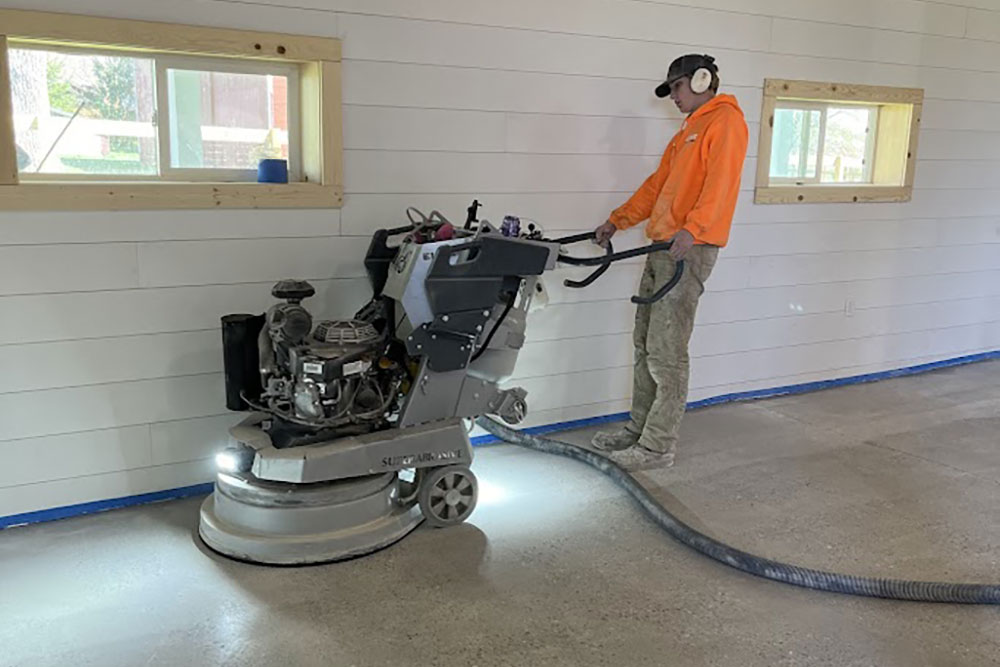
Concrete polishing is a mechanical process that grinds, hones, and polishes a concrete surface to a smooth, reflective finish. In Springfield, the process typically follows a specific sequence that most people don’t see in the finished product.
The grinding phase uses diamond-impregnated metal-bond abrasives to remove the top layer of concrete laitance, level high spots, and expose the aggregate beneath. The depth of grind determines the final look — a light grind keeps the surface cream-colored and subtle, while a deep grind exposes the sand and stone aggregate for a terrazzo-like appearance. The honing phase switches to finer resin-bond diamond pads that smooth the surface and refine the scratch pattern left by grinding. The polishing phase uses even finer diamond pads — often up to 3,000 grit — to create the reflective, glass-like finish. The densifier application is a critical step where liquid silicate hardeners penetrate the concrete and chemically react with calcium hydroxide to create a harder, more stain-resistant surface. The guard or sealer application provides the final protective layer that resists staining and makes daily cleaning easier.
In Springfield, we’ve noticed that most property owners assume polishing is just about making concrete shiny. The reality is that the process fundamentally changes the concrete’s surface chemistry and physical properties. A properly polished floor is harder, denser, and more abrasion-resistant than raw concrete. It doesn’t need waxing, stripping, or recoating like VCT or epoxy. Affordable concrete polishing services in Springfield, IL should explain this mechanical process clearly, because understanding what you’re paying for helps you evaluate quotes that seem too cheap to be real.
The Real Challenge in Springfield
What locals actually face with concrete polishing is shaped by Central Illinois’s climate, construction practices, and building stock in ways that generic advice misses.
The local challenge that catches property owners off guard: freeze-thaw damage and de-icer salt exposure. Springfield experiences harsh winters with temperatures regularly dropping below zero. Road salt, magnesium chloride, and calcium chloride tracked into buildings eat into unprotected concrete, causing surface scaling, pitting, and discoloration. Once salt damage starts, polishing can’t fix it — the damaged surface must be ground down past the affected layer or the floor will never polish properly.
Springfield’s building stock also varies widely. Downtown commercial buildings from the early 1900s have thick, dense concrete slabs that polish beautifully. Mid-century warehouses and manufacturing facilities often have concrete mixed with fly ash or other additives that affect how the surface grinds and densifies. Newer construction sometimes uses lightweight concrete or slabs with excessive air entrainment that won’t take a polish at all. The concrete itself determines whether polishing is even possible.
A client in Springfield reached out when they noticed their newly polished warehouse floor was dulling within six months and developing salt stains near the loading dock. The original contractor had skipped the densifier application to save money and had used a low-quality guard product that couldn’t handle the salt and forklift traffic. The concrete was actually softening under the abrasion and absorbing de-icer chemicals. They ended up needing a full re-grind, proper densification, and a commercial-grade guard system — essentially paying for the job twice.
Here’s the objection competitors rarely answer honestly: Will polished concrete be slippery when wet? Most Springfield polishing contractors avoid this question because the answer depends on finish level and slip resistance additives. A high-gloss 3,000-grit polish on a smooth concrete surface is genuinely slippery when wet. The fix is specifying a lower sheen level — satin or matte instead of high-gloss — or adding slip-resistant additives to the guard coat. For commercial spaces with public foot traffic, OSHA and ADA slip resistance standards must be met. Professional concrete polishing services in Springfield, IL should discuss slip resistance as part of the specification, not just sell you the shiniest floor possible.
How Concrete Art LLC Approaches It Differently
Most concrete polishing contractors in Springfield treat every floor the same — grind, hone, polish, apply guard, collect payment. We don’t. Central Illinois’s climate, soil conditions, and diverse building stock demand a more diagnostic approach. Our process includes:
- Concrete assessment before any equipment touches the floor: We test hardness with Mohs scratch tests, check for existing coatings or sealers, identify cracks and spalls that need repair, and evaluate salt damage or surface scaling. If the concrete won’t polish well, we tell you upfront rather than taking your money for a disappointing result
- Climate-appropriate specifications: We specify higher solids densifiers for Springfield’s freeze-thaw conditions, salt-resistant guard systems for entryways and loading docks, and matte or satin finishes where slip resistance is a priority
- Repair integration: Cracks, control joints, and surface defects don’t disappear during polishing. We fill cracks with color-matched polyurea, repair spalls with rapid-setting cementitious patches, and grind control joints clean so they don’t collect dirt
- Maintenance training: We show your maintenance staff how to clean the floor properly — pH-neutral cleaners, microfiber mops, and auto-scrubbers with soft pads. Wrong cleaning methods destroy the guard coat and dull the finish prematurely
Trusted concrete polishing services in Springfield, IL should also understand the local market. Springfield has a mix of state government buildings, healthcare facilities, manufacturing warehouses, retail spaces, and historic residential properties. Each has different traffic patterns, cleanliness standards, and aesthetic requirements. We adjust our aggregate exposure, sheen level, and guard system based on whether we’re polishing a Capitol Complex lobby, a hospital corridor, or a residential basement.
One insight generic articles never mention: Springfield’s soil is predominantly clay-loam with high plasticity, which causes significant slab movement and cracking over time. Many polished concrete floors in the area develop reflective cracking — cracks that mirror through the polished surface from movement below. Standard crack repair with rigid epoxies fails because the slab keeps moving. We use flexible polyurea joint fillers and crack repair systems that accommodate minor slab movement without re-cracking. Contractors who ignore Springfield’s expansive soil conditions end up with callback after callback for crack reappearance — and frustrated customers who paid for a “permanent” finish.
Practical Tips: What to Know Before You Decide
Before you commit to concrete polishing in Springfield, consider these points:
- Verify the concrete is polishable. New concrete needs 28 days minimum to cure. Existing concrete with heavy salt scaling, extensive cracking, or previous coatings may need remediation first. Ask for a test polish in an inconspicuous area before committing to the full floor.
- Understand the sheen level options. Matte finishes (400–800 grit) hide imperfections and provide better slip resistance. Satin finishes (800–1,500 grit) balance appearance and practicality. High-gloss finishes (1,500–3,000 grit) look stunning but show every scratch and require more maintenance. Choose based on your traffic and aesthetic priorities.
- Ask about joint and crack repair. Polishing doesn’t fix structural issues. Control joints, expansion joints, and cracks should be addressed before polishing. Know whether repair is included in the quote or billed separately.
Working with clients in Springfield, our team found that property owners who establish a regular cleaning schedule — daily dust mopping, weekly damp mopping with pH-neutral cleaner — maintain their polished floors for years without reapplication. One local tip: Springfield’s winter salt season runs November through March, and the damage happens fast. Place high-quality entrance mats at all exterior doors and clean them regularly. The mats trap salt and grit before they reach your polished floor. Best concrete polishing services in Springfield, IL should advise you on prevention, not just installation.
CONCLUSION:
Concrete polishing in Springfield is an investment that should last a decade or more, but only if the concrete underneath is sound and the process is done right. Central Illinois’s freeze-thaw cycles, salt exposure, and expansive clay soils create challenges that generic polishing advice misses. The right contractor assesses your concrete honestly, specifies materials for local conditions, repairs defects before polishing, and teaches you how to maintain the finish. If you’re considering polished concrete for your warehouse, retail space, or home, start with a professional evaluation that looks at concrete hardness, existing damage, and your specific usage before any grinder gets fired up. Concrete Art LLC provides these assessments for Springfield property owners who want floors that look great and stay that way.
FAQs
How much do concrete polishing services cost in Springfield?
Most concrete polishing in Springfield ranges from $3 to $8 per square foot depending on floor condition, desired sheen level, and whether repairs are needed. New concrete in good condition sits at the lower end. Floors requiring crack repair, coating removal, or extensive grinding reach the higher end. Always get a written, itemized estimate.
How long does concrete polishing take?
A standard 5,000-square-foot commercial floor takes 3 to 5 days from start to finish. Smaller residential basements take 1 to 2 days. Factors that add time include coating removal, extensive crack repair, and multiple sheen level samples. Your contractor should provide a clear timeline before starting.
Can any concrete floor be polished?
No. The concrete must be structurally sound, at least 28 days old, and free of coatings or sealers that prevent diamond grinding. Lightweight concrete, excessively porous concrete, or slabs with severe salt scaling may not polish well. A qualified contractor assesses your floor and tells you honestly whether polishing is the right solution.
How do I know a concrete polishing contractor is qualified?
Verify Illinois business registration, check for general liability insurance, and ask for local references from recent Springfield projects. A qualified contractor explains their process, shows you sheen level samples, provides a written warranty, and offers a test polish. Avoid anyone who quotes without seeing your floor.
How do I maintain a polished concrete floor?
Daily dust mopping removes abrasive grit. Weekly damp mopping with pH-neutral cleaner preserves the guard coat. Avoid acidic or alkaline cleaners that etch the surface. Reapply guard coat every 2–3 years in high-traffic areas. Entrance mats trap salt and debris during winter months. Proper maintenance extends the floor’s life significantly.