Outdoor Concrete Coating in Springfield, IL: What to Know
Springfield homeowners get durable outdoor concrete coating in Springfield, IL built to handle freeze-thaw cycles. Request a free quote.
A patio that looks great in June and starts flaking apart by the following March is one of the most common complaints homeowners bring up across central Illinois. Freeze-thaw cycles here do more damage to unprotected concrete than most people realize, which is exactly why outdoor concrete coating in Springfield, IL needs to be handled differently than it would be in a warmer state. I’ve spent years working alongside crews like Concrete Art LLC, watching which coating systems actually survive an Illinois winter and which ones crack apart within a season or two.
Springfield sits squarely in a climate zone where temperatures swing from summer humidity to sub-freezing winters, sometimes within the same month during spring and fall transitions. That repeated freezing and thawing pushes moisture in and out of concrete pores constantly, and a coating that isn’t built to flex with that movement fails fast, regardless of how good it looks on installation day.
What Outdoor Concrete Coating Actually Involves
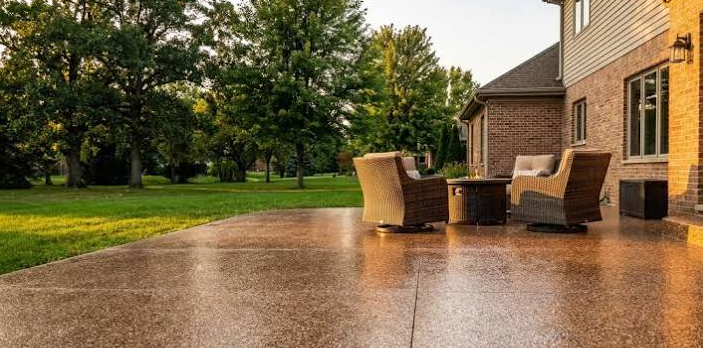
Outdoor concrete coating covers patios, driveways, pool decks, and walkways, using polyurea, polyaspartic, or epoxy-based systems designed to handle UV exposure and temperature swings. Unlike interior garage floors, outdoor coatings need to flex slightly as concrete expands and contracts through seasonal temperature changes, which is why the wrong product choice causes cracking within a year or two.
In Springfield, we’ve noticed that most homeowners assume any coating marketed as “outdoor-rated” will hold up here, without realizing that Illinois winters demand a more flexible formulation than what’s sold in southern states. A rigid epoxy that performs fine in Georgia often cracks along control joints here after just one hard freeze, since it can’t move with the concrete underneath it.
Common outdoor coating applications include:
- Pool decks needing slip resistance and UV-stable color
- Driveways requiring de-icing salt resistance during winter months
- Front porches and walkways exposed to direct freeze-thaw cycling
- Patios needing both aesthetic appeal and crack-bridging flexibility
- Garage aprons that see both vehicle traffic and winter road salt
The Real Challenge Springfield Homeowners Face
Central Illinois gets roughly 30 to 40 freeze-thaw cycles each winter, and that repeated expansion and contraction is the single biggest reason outdoor coatings fail here compared to milder climates. Add in the common use of de-icing salt on driveways and walkways, and you get a combination that breaks down lower-grade coatings within two winters.
A client near Lincoln Park reached out after their pool deck coating started cracking along every control joint just one winter after installation. The previous contractor had used a rigid epoxy system never designed for outdoor freeze-thaw exposure, essentially applying an interior product to an exterior surface. The deck needed to be stripped and recoated with a flexible polyaspartic system built to move with seasonal temperature changes.
Here’s an objection that rarely gets a straight answer: many homeowners assume any concrete coating will protect against salt damage equally. That’s not accurate. Standard epoxy systems degrade quickly when exposed to de-icing salt, while polyaspartic and polyurea coatings resist that breakdown far better. A trusted outdoor concrete coating in Springfield, IL contractor should recommend a salt-resistant formulation for any driveway or walkway, not a generic interior-grade product.
How Concrete Art LLC Approaches It Differently
Concrete Art LLC specifies polyaspartic topcoats for most outdoor projects in this region specifically because of their flexibility and faster cure time in cooler temperatures, both of which matter during Springfield’s shorter installation season. That product choice alone explains why some coatings here last a decade while others crack apart within eighteen months.
Many competitors apply the same coating system indoors and outdoors without adjusting for climate exposure, treating a garage floor and a driveway as the same project. That approach ignores how differently these surfaces experience temperature swings and salt exposure. Professional outdoor concrete coating in Springfield, IL work should always account for freeze-thaw flexibility, not just surface appearance.
Practical Tips: What to Know Before You Decide
Working with clients across Springfield, our team found that people rarely ask about installation timing until scheduling becomes a problem, since coatings applied too late in fall may not cure properly before the first freeze. Before booking any project, confirm the contractor’s cutoff date for outdoor applications, typically sometime in October for this region.
A few things worth confirming before hiring:
- Ask which coating system gets used outdoors versus indoors, since they shouldn’t be identical
- Confirm salt resistance if the surface will see winter de-icing products
- Request UV-stable color options to prevent fading over multiple summers
- Ask about installation cutoff dates tied to temperature and cure requirements
- Clarify warranty terms specific to freeze-thaw cracking, not just general wear
One local detail worth knowing: Springfield’s older neighborhoods often have concrete slabs poured decades ago without modern control joints, which affects how a coating needs to be applied to prevent cracking along unexpected stress points. A best outdoor concrete coating in Springfield, IL provider should inspect existing joint patterns before quoting, not after the crew arrives.
Protecting Your Concrete Through Another Illinois Winter
Outdoor concrete surfaces in Springfield face a harder test than almost anywhere in a milder climate, and a coating built for the wrong conditions rarely survives past its first winter. Choosing a flexible, salt-resistant system matters more here than color selection or price alone. Concrete Art LLC offers free assessments for homeowners across Springfield who want honest guidance on which coating system fits their specific surface and exposure. That evaluation costs nothing, and it usually prevents a costly recoat down the road.
Conclusion
Getting outdoor concrete coating right in Springfield depends far more on climate suitability than most homeowners initially expect. Freeze-thaw cycling, de-icing salt, and shorter installation windows all shape which products actually hold up through repeated Illinois winters. Homeowners who ask about flexibility, salt resistance, and installation timing before signing a contract consistently avoid the cracking and peeling that plague lower-grade applications. A contractor willing to explain these tradeoffs honestly, before any work begins, is the one worth choosing for a surface meant to last for years.
FAQs
1. How much does outdoor concrete coating cost in Springfield?
Most projects range from $5 to $10 per square foot, depending on surface size, coating type, and how much crack repair is needed beforehand. Pool decks and driveways with heavy salt exposure often cost more due to specialized formulations. Always get a written estimate after an on-site inspection.
2. How do I know an outdoor coating contractor is trustworthy?
Ask which specific product they use for outdoor applications and whether it’s rated for freeze-thaw cycling, not just general durability. Legitimate contractors explain the difference between interior and exterior coating systems clearly and provide warranty terms in writing before any work begins.
3. How long does outdoor concrete coating last in a climate like Springfield’s?
A properly matched coating system typically lasts 8 to 15 years, depending on traffic, salt exposure, and sun exposure. Coatings not designed for freeze-thaw cycling often fail within one to two winters, which is why product selection matters more here than in milder climates.
4. Can concrete coating be applied over cracked or damaged surfaces?
Yes, but existing cracks need proper repair and control joint work before coating, otherwise they reappear through the new surface within a season. A qualified installer addresses these issues as part of surface prep, which adds time but prevents premature failure at weak points.
5. What time of year is best for outdoor concrete coating installation in Springfield?
Late spring through early fall works best, since most coatings need consistent temperatures above 50 degrees to cure properly. Projects scheduled too close to the first frost risk improper curing, which shortens the coating’s lifespan and increases the chance of early cracking.