Commercial Concrete Polishing in Rochester, IL That Lasts
Concrete Art LLC provides professional commercial concrete polishing in Rochester, IL for durable, low-maintenance floors. Get your free site assessment today.
Your commercial floor takes more punishment than any other surface in the building. Forklifts, foot traffic, pallet jacks, cleaning chemicals, and years of freeze-thaw salt tracking from Illinois winters — it all adds up. If your concrete looks dull, pitted, or dusty no matter how often it gets cleaned, that’s not a maintenance problem. That’s a surface problem. Concrete Art LLC handles commercial concrete polishing in Rochester, IL for businesses that need a floor that performs and looks the part without constant upkeep. The difference between a polished slab and an untreated one is measured in decades, not years.
Affordable Commercial Concrete Polishing in Rochester, IL: What the Process Actually Does
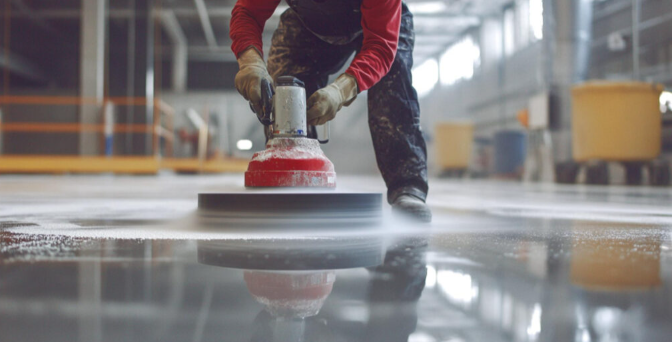
Concrete polishing is a mechanical densification and grinding process that transforms a raw or worn concrete slab into a hard, sealed, reflective surface. It’s not a coating. Nothing is applied on top that can peel, chip, or delaminate. Instead, the concrete itself is refined — ground through a series of progressively finer diamond tooling segments, treated with a chemical densifier that fills the pores and hardens the surface, and then burnished to the desired sheen level, from a flat matte to a high-gloss finish that reflects overhead lighting.
The result is a floor that resists surface dusting, repels most liquid spills, tolerates heavy equipment traffic, and cleans with nothing more than a damp mop. For commercial and industrial facilities, that maintenance simplicity translates directly into reduced labor costs and longer intervals between floor rehabilitation.
In Rochester, we’ve noticed that most business owners looking into Trusted commercial concrete polishing In Rochester are initially surprised to learn that polished concrete is almost always less expensive over a five-year period than vinyl composition tile, carpet, or epoxy coating — when you factor in replacement cycles and maintenance labor. The upfront cost is real, but the long-term math strongly favors polished concrete for high-traffic commercial applications.
The Real Flooring Challenge Commercial Properties in Rochester, IL Face
Rochester sits in Sangamon County, and like much of central Illinois, commercial buildings here deal with a flooring problem that starts at the door: road salt. From November through March, salt and calcium chloride tracked in from parking lots and loading docks work their way into untreated concrete, causing surface scaling, pitting, and a chalky residue that never fully vacuums up. That surface dust is actually deteriorating concrete — fine particles worn off by traffic and chemical action.
Unpolished commercial floors in this region also tend to absorb oil, hydraulic fluid, and cleaning chemicals over time, making them progressively harder to clean and increasingly slippery when wet. What starts as a maintenance annoyance becomes a liability concern.
A client Best commercial concrete polishing in Rochester reached out to Concrete Art LLC after the vinyl tile flooring in their 8,000-square-foot retail warehouse had failed for the second time in six years. The adhesive bond kept releasing in high-traffic aisles, and the replacement cost was becoming unsustainable. Concrete Art LLC assessed the existing slab — which was in solid structural condition beneath the tile — removed the old flooring, ground and densified the concrete, and polished it to a medium-gloss finish. Two years later, that floor requires nothing beyond routine damp mopping and shows no signs of wear in the main traffic lanes.
The objection that almost no polishing contractor addresses directly: “My concrete has cracks and staining — is it too far gone to polish?” The honest answer is that most commercial slabs are candidates for polishing regardless of surface condition. Cracks can be filled with semi-rigid epoxy filler prior to grinding; staining either grinds out or becomes part of the floor’s character. Concrete Art LLC assesses every slab before quoting and gives a clear picture of what the finished floor will look like — including areas where prior damage will remain visible. That transparency prevents the disappointment that comes from unrealistic expectations.
How Concrete Art LLC Approaches Commercial Polishing Differently
Concrete Art LLC’s commercial polishing process starts with a slab assessment that covers hardness, existing coatings or sealers, crack map, and any contamination zones. That assessment determines the starting grit level, which affects both the aggressiveness of the initial grind and the number of passes required to reach the specified finish.
Most commercial polishing contractors work in grit sequences of 30/80/150/400/800/1500/3000, though not every project requires the full sequence. Softer concrete needs more passes at lower grits before the surface is ready to accept a densifier. Harder concrete can move through the sequence faster. Concrete Art LLC calibrates the process to the actual slab rather than applying a fixed schedule to every job.
The chemical densifier is the step that most generic polishing articles gloss over, and it’s where the floor’s long-term hardness is determined. Concrete Art LLC uses a lithium silicate densifier on commercial projects — not sodium or potassium silicate — because lithium penetrates more deeply and produces a harder reaction product within the slab’s pore structure. That extra hardness is what makes the floor resistant to surface abrasion from pallet jacks and heavy foot traffic over years of use.
Here’s something the competitors rarely mention: the gloss level you choose at the outset affects maintenance requirements permanently. A high-gloss finish at 3000 grit shows scratch patterns and requires periodic burnishing to maintain its appearance. A medium-gloss finish at 800 grit hides daily wear better and needs less maintenance — and for most Rochester commercial environments, it’s the right practical choice. Concrete Art LLC walks clients through this decision rather than defaulting to the finish level that photographs best.
What to Know Before You Commission Polishing Work in Rochester, IL
Working with clients, our team found that the commercial polishing projects with the smoothest outcomes share one common feature: the business owner had a realistic picture of the timeline before the crew arrived. Polishing a 5,000-square-foot commercial floor typically takes two to three days for the grinding and polishing sequence, with the floor ready for light foot traffic the same day grinding completes. Heavy equipment and pallet jacks should wait 24 hours after final burnishing.
A few things worth knowing before you decide:
Existing coatings must be removed before polishing can begin. If your floor has a paint, epoxy, or urethane coating, that material comes off first — and removal adds to the project scope. Concrete Art LLC includes a coating check in every pre-project assessment so there are no surprises on day one.
Not all concrete is equally polishable. Very soft concrete, or slabs with widespread surface delamination, may require a different treatment approach. Concrete Art LLC identifies these conditions upfront and recommends the appropriate process — whether that’s standard polishing, a hybrid densified-sealer system, or surface repair before polishing begins.
For Rochester specifically, trusted commercial concrete polishing services should include post-project maintenance guidance. Central Illinois winters mean salt and grit will be tracked onto the floor regularly. A polished floor handles this well, but the entrance mats at exterior doors matter more than most facility managers realize. Concrete Art LLC provides a written maintenance protocol with every commercial project — because a floor that’s cared for correctly after installation performs far better than one that isn’t.
Professional commercial concrete polishing in Rochester, IL is also not a one-size-fits-all specification. Concrete Art LLC writes a project spec sheet for every commercial job that documents grit sequence, densifier type, final sheen level, and any crack or joint treatment performed — so the building owner has a permanent record of exactly what was done to their floor.
Rochester Commercial Floors Deserve More Than a Temporary Fix — Concrete Art LLC Delivers
A polished concrete floor isn’t a cosmetic upgrade — it’s a long-term infrastructure decision that eliminates recurring flooring replacement costs and simplifies daily maintenance. Concrete Art LLC brings the process discipline, product knowledge, and local experience to make commercial concrete polishing in Rochester, IL work the way it’s supposed to. Contact Concrete Art LLC today for a free slab assessment and a written project proposal that tells you exactly what you’re getting and why.
Frequently Asked Questions
How much does commercial concrete polishing cost in Rochester, IL?
Commercial polishing typically runs $3–$8 per square foot in the Rochester area, depending on slab condition, existing coatings, finish level specified, and square footage. Larger projects generally come in at the lower end of the range. Concrete Art LLC provides itemized written quotes after a site assessment. Affordable commercial concrete polishing means the price reflects the actual scope — not a number that grows after the crew arrives.
How do I know Concrete Art LLC does quality work I can count on?
Concrete Art LLC is a licensed Illinois contractor with documented commercial polishing projects across Sangamon County and the surrounding region. We carry general liability insurance, provide written project specifications before any work begins, and offer references from completed commercial clients. Trusted commercial concrete polishing means being accountable to local businesses we’ll run into again — not just collecting a deposit and moving on.
How long does commercial concrete polishing last?
A properly polished and densified commercial floor in Rochester should perform for 15 to 20 years with basic maintenance — routine damp mopping and periodic burnishing for gloss retention. There’s no coating to reapply and no adhesive bond to fail. The floor simply gets used. Professional commercial concrete polishing done correctly is genuinely one of the lowest long-term cost flooring options available for high-traffic commercial spaces.
Can Concrete Art LLC polish a floor that has cracks or old coating on it?
Yes to both, with qualifications. Cracks are filled with semi-rigid epoxy filler before grinding begins. Old coatings — paint, epoxy, urethane — are removed mechanically before the polishing sequence starts. Concrete Art LLC identifies both conditions during the pre-project slab walk and adjusts the scope accordingly. What matters is that you know the full scope before work begins, not partway through.
How disruptive is concrete polishing to an operating business?
Most commercial polishing work can be phased by section so that portions of the facility remain operational. Dust is managed with vacuum-equipped grinders, though some fine particulate is unavoidable during the initial grinding passes. Concrete Art LLC plans project sequencing around your business hours when possible and discusses operational impact during the pre-project consultation so there are no surprises.