Garage Concrete Coating in Jacksonville, IL: What to Know
Protect your garage floor with garage concrete coating in Jacksonville, IL. Learn costs, freeze-thaw durability, and how to avoid DIY failures.
Your garage floor has seen better days. Oil stains from the lawnmower, salt residue from winter boots, and cracks that started small but spread across the entire slab after last year’s freeze-thaw cycle. You have thought about painting it, maybe even tried a DIY epoxy kit from the hardware store, but the reviews from Illinois homeowners are sobering. This is the exact situation that leads people to search for garage concrete coating in Jacksonville, IL, and the reality is that Central Illinois weather will destroy the wrong coating faster than almost anywhere else in the region. Concrete Art LLC has worked on concrete floors across Morgan County for years, and the failures we see most often are not about the product. They are about homeowners not understanding what their concrete is actually up against.
What Garage Concrete Coating Actually Means in Jacksonville
Garage concrete coating is a protective and decorative system applied to cured concrete to seal the surface, resist chemical and physical damage, and improve appearance. In Jacksonville, this service is most commonly requested for garage floors, basement slabs, and workshop areas. The coating creates a barrier between the porous concrete and the elements, preventing moisture intrusion, resisting oil and chemical stains, and providing a slip-resistant finish that is easier to clean than bare concrete.
In Jacksonville, we have noticed that most homeowners assume all concrete coatings are basically the same. They are not. The three main categories are epoxy, polyurea, and polyaspartic, and each performs differently in Illinois’s climate. Epoxy coatings cost $4 to $10 per square foot installed and offer excellent chemical resistance, but they take up to a week to fully cure and are vulnerable to UV yellowing and thermal shock from freeze-thaw cycles. Polyurea coatings run $5 to $10 per square foot, cure in a single day, and resist UV damage and temperature swings far better than epoxy. Polyaspartic coatings, a subset of polyurea, cost $5 to $12 per square foot and offer the fastest cure times with superior UV stability, making them ideal for garage floors that see direct sunlight and extreme temperature variations.
For residential garage concrete coating in Jacksonville, IL, the installation process for any of these systems starts with mechanical surface preparation, either diamond grinding or shot blasting, to remove the weak cement paste layer and open the concrete pores for bonding. Cracks and spalls are repaired with epoxy or polyurea fillers. Moisture vapor transmission testing determines whether a moisture-mitigating primer is needed. The base coat is applied, decorative flakes or quartz are broadcast if desired, and a clear topcoat provides the final protective layer. Skip the prep, and even the most expensive coating will peel within a year.
The Real Challenge Jacksonville Homeowners Face
The hardest truth about concrete coatings in Jacksonville is that Illinois winters are not just cold. They are actively destructive to improperly coated concrete. The freeze-thaw cycle, where water seeps into concrete pores, freezes, expands, and thaws repeatedly, creates internal pressure that causes spalling, cracking, and surface degradation. When a coating is applied over concrete with existing moisture problems or without proper vapor barrier protection, the trapped moisture beneath the coating freezes and creates blisters, delamination, and complete coating failure. Road salt and de-icing chemicals accelerate this damage by increasing the freeze-thaw frequency and chemically attacking both the concrete and the coating.
A client in Jacksonville reached out when they noticed their DIY epoxy garage floor coating was lifting in large sheets after the second winter. They had cleaned the concrete thoroughly, applied the kit according to instructions, and even added a second coat for extra durability. What they did not do was test for moisture vapor transmission, repair the hairline cracks that allowed water to penetrate the slab, or account for the fact that their garage slab had no vapor barrier beneath it because the home was built in the 1980s before that became standard practice. The freeze-thaw cycle had done what it always does: destroy anything that was not specifically designed to handle it. The remediation required grinding off the failed coating, installing a moisture-mitigating primer, and applying a polyurea system with a flexible topcoat designed for thermal expansion. The DIY kit that cost $300 ended up costing over $3,500 to fix.
Here is the objection most competitors ignore: what happens when the coating fails, and does the warranty actually cover the real causes of failure? Many coating companies in the Springfield and Jacksonville area offer lifetime warranties that sound impressive but contain exclusions for moisture-related damage, improper maintenance, and acts of nature, which effectively covers almost nothing in Illinois. The question competitors avoid is whether their warranty covers freeze-thaw damage, the single most common cause of coating failure in this region. Most will not discuss this openly because their standard epoxy systems are not rated for the thermal cycling that Illinois concrete experiences, and they know the failure rate is higher than their marketing suggests.
How Concrete Art LLC Approaches Garage Floor Coating Differently
Most concrete coating contractors in the Jacksonville area use the same product line for every job, regardless of whether the floor is a garage slab exposed to road salt and freeze-thaw cycles or a basement floor sitting on damp soil. Concrete Art LLC starts every project with a site-specific assessment that evaluates the concrete’s age, condition, moisture vapor transmission rate, exposure to direct sunlight, and the specific stresses the floor will face.
What sets this apart in Jacksonville specifically is our understanding of the local housing stock and the construction practices that create coating failure risks. Many homes in Jacksonville and surrounding Morgan County were built during the 1980s and 1990s with minimal or no sub-slab vapor barriers, thin concrete pours, and steel trowel finishes that are too smooth for proper coating adhesion. We know which neighborhoods have high water tables, which soil types promote moisture migration through slabs, and how to specify the right primer and coating system for each condition. For garage floors that see heavy road salt exposure, we specify polyurea or polyaspartic systems with flexible topcoats that handle thermal expansion without cracking. For basement floors with moisture concerns, we use 100 percent solids epoxy primers with moisture-mitigating properties before applying the finish coat.
For affordable garage concrete coating in Jacksonville, IL, we offer transparent pricing based on actual square footage, surface condition, and moisture mitigation requirements. A typical two-car garage of 400 square feet costs $1,600 to $4,800 for professional preparation, moisture testing, primer application, base coat, flake broadcast, and polyaspartic topcoat. We do not pad bills with unnecessary prep work or upsell products that do not match the surface’s actual needs.
Here is the insight generic articles never mention: the direction your garage faces relative to the afternoon sun determines how fast your coating will yellow and degrade, and almost no contractor considers this during specification. In Jacksonville, west and south-facing garage doors receive hours of intense summer sun that heats the concrete surface to temperatures exceeding 120 degrees. Standard epoxy coatings, even those marketed as UV-stable, will yellow and chalk under this thermal and UV load within two to three years. Polyaspartic topcoats with true UV stabilizers and aliphatic chemistry resist this degradation, but they cost more and require more skill to apply. Most contractors will not bring this up because it requires them to recommend a more expensive system rather than the standard epoxy package that fits their volume business model.
Practical Tips: What to Know Before You Decide
Start by understanding that surface preparation is not optional cleaning. It is mechanical abrasion that removes the weak top layer of concrete and creates the profile that allows the coating to bond. Acid etching, the method recommended by most DIY kits, is ineffective on hard-troweled Illinois garage slabs and creates a dusty, weak surface that coatings cannot adhere to properly. Diamond grinding or shot blasting accounts for 60 to 70 percent of a professional installation cost, and it is the single biggest factor in whether your coating lasts ten years or ten months.
Working with clients in Jacksonville, our team found that roughly two-thirds of homeowners do not know whether their garage slab has a vapor barrier beneath it. This matters because slabs without vapor barriers allow groundwater to migrate upward year-round, creating constant moisture pressure beneath any coating. You can check by taping a square of plastic sheeting to the garage floor and leaving it for 24 hours. If moisture collects beneath the plastic, your slab has active vapor transmission that must be addressed before coating. A professional moisture test using calcium chloride kits or in-situ relative humidity probes provides the precise data needed to specify the right primer system.
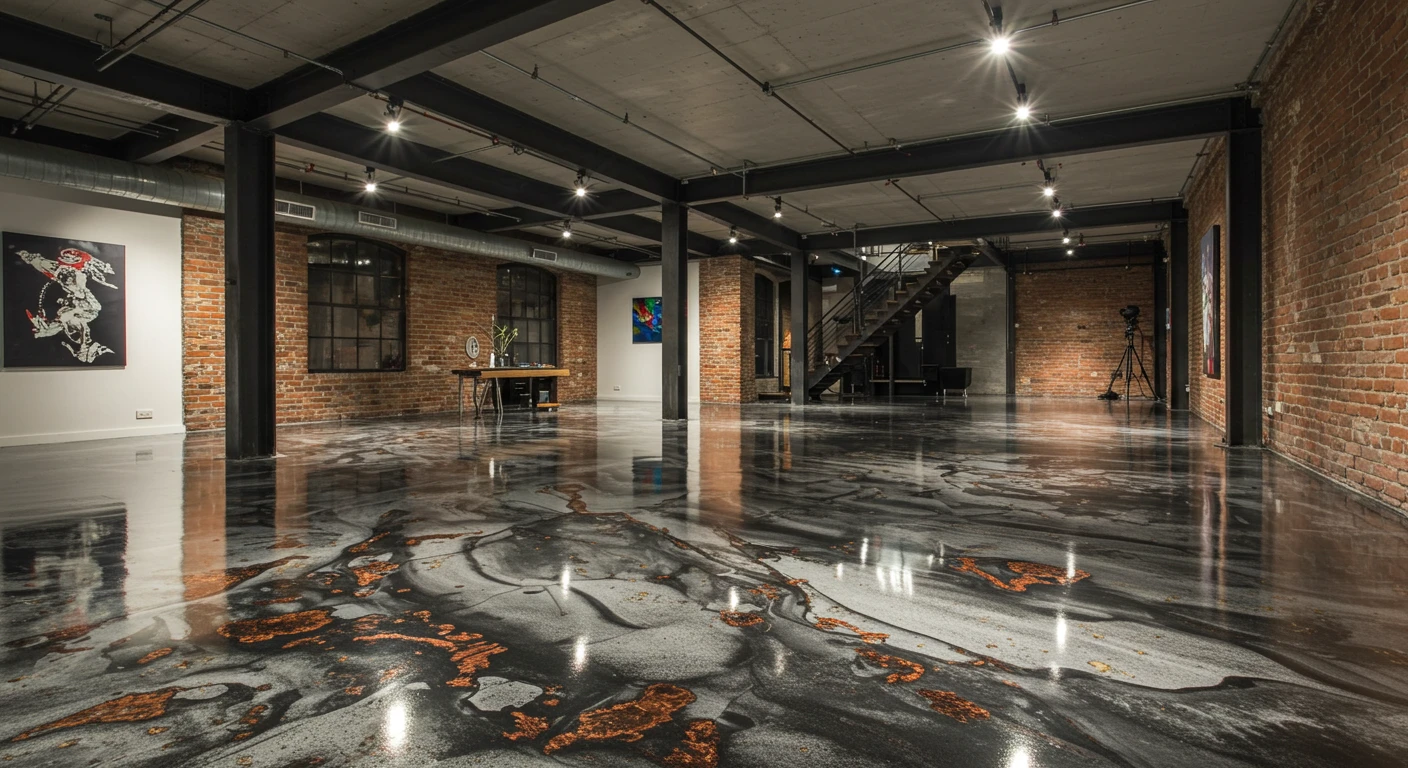
Second, understand the difference between decorative appeal and functional durability. Flake systems and metallic finishes look impressive, but the broadcast flakes create texture that traps dirt and requires more aggressive cleaning. If your garage is a working space with heavy equipment, consider a solid color quartz system that offers excellent slip resistance without the maintenance demands of full flake broadcast. The right choice depends on how you actually use the space, not how you want it to look in a showroom photo.
One local market-specific tip: Jacksonville sits on clay-rich soils that expand and contract significantly with seasonal moisture changes. This soil movement creates stress on garage slabs that leads to cracking, especially at the control joints. Before applying any coating, these cracks must be properly repaired with flexible fillers that accommodate movement, not rigid epoxy patches that will crack again within the first winter. We also recommend saw-cutting additional control joints in large garage slabs after coating to allow for controlled cracking rather than random surface failures. This is a detail that separates local expertise from out-of-town contractors who treat every slab the same regardless of regional soil conditions.
For professional garage concrete coating in Jacksonville, IL, look for contractors who perform moisture testing, explain their preparation process in detail, and have experience with Illinois freeze-thaw conditions. The lowest bid is rarely the best value if it means skipping critical prep steps or using an incompatible sealer formulation.
Why the Right Coating System Matters More Than the Lowest Price
A concrete coating is not a cosmetic upgrade. It is a protective system that must withstand road salt, freeze-thaw cycles, UV exposure, and the daily abuse of vehicles and equipment. The wrong system will look good for a season and then fail, leaving you with a floor that is harder to maintain than bare concrete. Concrete Art LLC has built its reputation in Jacksonville on specifying and installing Garage concrete coating systems that match the actual demands of Central Illinois weather and soil conditions, not just the color preferences of the homeowner. If your garage floor is stained, cracked, or just plain ugly, the next step is a professional assessment that evaluates your concrete’s condition, moisture profile, and exposure before any product is recommended.
FAQs
How much does garage concrete coating cost in Jacksonville, IL?
Professional garage concrete coating in Jacksonville typically ranges from $4 to $12 per square foot depending on the coating type, surface condition, and moisture mitigation requirements. A standard two-car garage around 400 square feet costs $1,600 to $4,800. Projects requiring crack repair, moisture vapor barriers, or decorative flake systems run higher. DIY kits cost $200 to $600 but carry high failure rates in Illinois’s freeze-thaw climate.
How long does concrete coating take to install?
A professional installation typically takes one to two days for standard garage floors. Polyurea and polyaspartic systems cure fast enough for light foot traffic in 24 hours and vehicle traffic in 72 hours. Epoxy systems require three to seven days for full cure. Projects with extensive crack repair or moisture mitigation may extend to three days.
Will concrete coating hold up through Illinois winters?
Yes, when the right system is properly installed. Polyurea and polyaspartic coatings with flexible topcoats handle freeze-thaw cycles and road salt exposure far better than standard epoxy. The key factors are proper surface preparation, moisture vapor management, and crack repair before coating application. Epoxy systems without these precautions are likely to fail within two winters.
What causes concrete coating to peel or bubble?
Peeling and bubbling are almost always caused by moisture vapor trapped beneath the coating, inadequate surface preparation, or application over a smooth or contaminated slab. In Illinois, freeze-thaw cycles accelerate these failures by creating pressure beneath the coating. Proper mechanical prep, moisture testing, and primer selection prevent these issues.
How do I know if a concrete coating contractor is legitimate?
Verify that the contractor is licensed and insured in Illinois, can provide local references from recent jobs in Jacksonville or Morgan County, and explains their surface preparation process in detail. Ask specifically about moisture testing, warranty terms, and whether they have experience with Illinois freeze-thaw conditions. Avoid contractors who quote flat rates over the phone without seeing your floor or who dismiss the importance of mechanical surface preparation.